For most of my life, being highly sensitive felt like carrying an instruction manual everyone else had except me. I noticed things others missed. Loud environments exhausted me. Criticism lingered long when others noticed nothing or moved on. Smells irritated me and made me feel weak. Bright lights made me dizzy. And for years, I wondered why I didn’t fit in. It wasn’t until I learned about Sensory Processing Sensitivity that I finally understood there was nothing wrong with me.
- Nothing needs fixing.
- I am not flawed.
- I am highly sensitive.
If someone has Sensory Processing Sensitivity, their nervous system takes in physical, emotional, and social information more deeply and processes it more intensely. However, my most enlightening insights didn’t come from books. My greatest teachers were my local furry, feathered, four-legged friends.
NOT A WEAKNESS, AN ADVANTAGE
Living on the California coast, my husband and I enjoy watching wildlife during our quiet walks. Cypress and Pine trees border our neighborhood, the perfect setting for our wild animal friends. Over the years, I’ve watched majestic hawks circle overhead, hummingbirds dart through the garden, squirrels chitter and jump, and deer quietly move through the neighborhood, while countless birds respond to the slightest shift in their surroundings.
What fascinates me is their heightened awareness and mutual respect. A subtle movement, a distant sound, a change in the wind, and they respond immediately.
Nature teaches me daily that sensitivity is not weakness. It’s an advantage.
For many years, I viewed my own sensitivity as something I needed to overcome. Like many highly sensitive people, I was told, “You are too sensitive.” Yet the more I studied Sensory Processing Sensitivity and observed people and nature, the more I questioned that belief. I asked, “Am I really ‘too sensitive,’ or am I like the hawk, experiencing life from a different perspective?
WHAT IF SENSITIVITY IS NOT A FLAW?
Hearing my friends and family tell me I was “too sensitive” greatly affected me as a child and young adult, often feeling inept and struggling to fit in.
Did you feel that way too? If so, there is good news.
Today, modern thinkers know sensitivity isn’t a flaw to overcome, but a tool we can use to create a healthier, happier, more meaningful life. When we understand and nurture it, sensitivity can become one of our greatest advantages.
Sensory Processing Sensitivity appears in all cultures and has been identified in multiple animal species, although prevalence varies. This clearly shows that Sensory Processing Sensitivity is a normal temperament trait. It occurs in a significant minority of the population and is documented across many species.
Let’s take a closer look and embrace the truth about highly sensitive people.
DEBUNKING OLD THINKING
For generations, highly sensitive or hypersensitive beings have been misunderstood or misdiagnosed and told:
- You are too sensitive
- You have a mental disorder.
- You are an introvert.
- You are being dramatic.
- You are imagining things.
- Women are more sensitive.
- SPS or HSP is just a fancy word for shy.
- You need exposure therapy.
- You have autism, ADHD, PTSD, bipolar disorder, or depression.
- Your symptoms are psychosomatic.
If you’ve spent years believing something was wrong with you, I hope you’ll pause and consider another possibility. What if your sensitivity is not evidence of a flaw, but a unique way of experiencing and responding to the world?
DIFFERENTIAL SUSCEPTIBILITY—WHAT’S THAT?
Today, modern sensitivity research focuses on Differential Susceptibility. What does this mean? We know now that highly sensitive people aren’t simply more vulnerable. They are more affected by both negative and positive environments.
This means sensitive people are more deeply affected by harsher environments and benefit more from nurturing environments, such as supportive relationships, positive parenting, healthy workplaces, meaningful therapies, and nurturing communities.
What about you? Have you been told, “Stop worrying.” “You’re too much.” “You are too sensitive.” or “You’re so dramatic.” “Chill.” Let’s let go of the old “fragile person” narrative and embrace the positive aspects of being highly sensitive.
SUPPORTIVE ENVIRONMENTS
Nature and wildlife tell me that SPS individuals can change the world with their high impact. Knowing that highly sensitive people greatly benefit from positive, supportive environments makes the choice clear.
Highly sensitive people will greatly benefit from modifying their environment.
- Create your safe space—Consider textures, smells, sounds, and lights.
- Join a community—Find encouraging, supportive, like-minded, sensitive souls.
- Avoid stressful environments—What triggers stress for you? What can you remove or modify?
- Trust your instincts—How does your body alert or alarm you when feeling danger?
- Practice disciplined self-care—What can you add to your daily routine?
- Embrace your strengths—Identify your talents, gifts, and value to the family and community.
- Rest, Reflect, and Reset—Just as animals seek safe shelter, quiet, and recovery, give yourself permission to pause, rest, reflect, and reset.
HOW NATURE MANAGES SENSITIVITY
Nature is abuzz with sensitivity. The hawk has a higher “flicker fusion” rate and can spot a hidden mouse twitching in a field from hundreds of feet up. Meanwhile, the mouse senses stress and fear pheromones from other mice, immediately assesses the threat level, and makes a speedy exit. The migratory robin sees beyond normal human vision. It navigates by sensing Earth’s magnetic fields. And my dog, Pumpkin, doesn’t just smell a scent. When she sniffs the ground, she uses her olfactory system to know who, what, where, and when someone or something passed by.
Wildlife never hides from their sensitivities. They creatively use them to survive and thrive. Yet many sensitive people spend years apologizing for the very qualities that will help them navigate the world.
LESSONS FROM THE WILDLIFE
Sensitivity flourishes in nurturing environments. Nature and wild neighbors teach us how to manage our sensitivity with respect. Rather than trying to become less sensitive, create conditions that let your sensitivity become one of your greatest strengths.
1. Stop Comparing—The migratory robin doesn’t try to do what the pigeons, dogs, or deer are doing. Instead, it quietly aligns itself with the Earth’s invisible magnetic fields and flies thousands of miles in the right direction. Comparing yourself to others or trying to use their sensory map is ineffective and exhausting. Be you.
2. Permission to Choose—Do you notice every loud noise, bright light, scratchy fabric, and passing emotion? If so, your brain burns through fuel much faster than a non-HSP. Do you need more sleep for fewer social obligations? Give yourself permission to choose the situation that best supports your joy and happiness.
3. Trust Your Data —The mouse doesn’t ask for permission to leave the area and make a speedy exit. It doesn’t say, “I’m just being paranoid. I’ll stay here.” The mouse trusts its pheromone data when it feels anxiety or fear.
4. Build Our Own Safe Space – When a dog or cat is overwhelmed with sensory stimulation, they often will find a dark, quiet room to relax and regroup. They don’t feel guilty or force themselves to sit in the bright, noisy kitchen with the family. Give yourself permission to do the same.
5. Shift Perspective—The hawk has a higher “flicker-rate” than humans. In one second, we might see a blur, but the hawk sees 100 images in detail. When it’s time to rest, it doesn’t head into a shopping mall, overwhelmed by flickering lights and loud sounds. It flies up above everything and gets a higher view. If you are experiencing sensory overload, give yourself permission to leave and take a higher perspective.
Modern thinkers regard sensitivity as a positive trait that can bring us health, happiness, and love.
Rather than viewing these traits as weaknesses, it is time to bring awareness, trust our instincts, practice healthy self-care, find community, and recognize sensitive people as part of our rich diversity within our families, communities, and even our entire species.
SUMMARY
Highly sensitive souls, whether two-legged or four-legged, help us as a species to adapt and thrive. If you are hypersensitive, highly sensitive, SPS, or HSP, the Wellness Universe cares about you.
When we feel overwhelmed, the goal is not to become less sensitive.The goal is to become more skilled at using our sensitivity.
Like any tool, sensitivity can create challenges when it is misunderstood. Yet when we nurture it, respect it, and channel it wisely, it can become a source of insight, compassion, creativity, connection, and resilience.
We know that you are not flawed. You are perceptive. You experience and respond to the world in a unique way, and that perspective matters. Perhaps the problem was never that you were “too sensitive.” Perhaps no one ever taught you how to use one of your greatest gifts. You matter, and you are not alone. Thank you.
REFERENCES
- Greven, C. U., Lionetti, F., Booth, C., Aron, E. N., et al. (2019). Sensory Processing Sensitivity in the Context of Environmental Sensitivity: A Critical Review and Development of Research Agenda. Neuroscience & Biobehavioral Reviews.
- Morellini, L., Izzo, A., Celeghin, A., Palermo, S., & Morese, R. (2023). Sensory Processing Sensitivity and Social Pain: A Hypothesis and Theory. Frontiers in Human Neuroscience.
- Meinersen-Schmidt, N., Walter, N., Kulla, P., et al. (2023). Neurophysiological Signatures of Sensory-Processing Sensitivity. Frontiers in Neuroscience.
- Acevedo, B. P., Aron, E. N., Aron, A., et al. (2014). The Highly Sensitive Brain: An fMRI Study of Sensory Processing Sensitivity and Response to Others’ Emotions. Brain and Behavior.
- David, S., Brown, L. L., Aron, E., et al. (2022). Sensory Processing Sensitivity and Axonal Microarchitecture. Brain Structure and Function
TAKE MY HAND SUPPORT SERIES
Across cultures and communities, the holiday season can feel overwhelming for many people — especially those with sensitive nervous systems. Research shows that 20–30% of adults have a highly sensitive temperament and process emotional and sensory information more deeply than average. During the holidays, 60% of highly sensitive individuals report increased stress due to overstimulation, crowded environments, and heightened emotional expectations, and 72% struggle to set boundaries during family gatherings.
Studies reveal that 45% of adults experience heightened emotional reactivity during the holidays, and 62% say family interactions trigger old emotional patterns, increasing hypersensitive responses. Even with these challenges, sensitivity in all its forms carries profound strengths: deeper empathy, intuitive awareness, and the capacity for meaningful connection. With compassionate support, the holiday season can nourish rather than deplete.
Holiday Support for Highly Sensitive Souls

Hope is here now.
Please join us Saturday, November 14, 2026, at 9 AM PT / 12 PM ET for a heart‑centered episode of the “Take My Hand Support Series,” a mental health, grief support, and suicide‑prevention platform hosted by Jean Voice Dart.
In this special event, “Holiday Support for Highly Sensitive Souls,” Jean will welcome a panel of compassionate practitioners who specialize in emotional wellbeing, intuitive sensitivity, and holistic seasonal care.
EXPERT SPEAKERS
- Maria Feider, Social Media Manager at The Wellness Universe and Intuitive Energy Healer, supporting individuals in emotional clarity, energetic balance, and empowered sensitivity.
- Carolyn McGee, Sacred Haven Living Guide and Intuitive Teacher, helping people strengthen self‑trust, break old patterns, and navigate life through embodied intuition.
- Norman Gordon, Life Coach, Poet, and Author, offering lived wisdom as an attempted suicide survivor and guiding others toward emotional healing, resilience, and hope.
Together, they will share lived experiences, grounding practices, and supportive strategies to help highly sensitive individuals navigate the holiday season with clarity, resilience, and grace.
The holidays can stir old wounds, amplify stress, and heighten emotional intensity—yet they also offer opportunities for connection, reflection, and gentle joy. When we honor sensitivity as a gift, we create space for healing, authenticity, and peace.
It’s time to support your sensitive soul. Your wellness matters, and you are not alone.
Register & Join Live: https://bit.ly/WUTakeMyHandSupportSeries
About Jean Voice Dart
Jean Voice Dart, M.S., RMT, is a multiple international best-selling author, a psychotherapist of nearly fifty years, a certified coach, and a credentialed teacher who navigated through grief, trauma, shame, and pain, upleveling her life from stressed to blessed. She has witnessed a lifetime of miraculous transformations, helping others feel, reveal, and heal. Jean is a senior partner at The Wellness Universe and hosts the “Take My Hand Support Series,” bringing awareness and support for suicide prevention. She lives by the ocean with her husband and dog, Pumpkin.
Connect with Jean on The Wellness Universe and follow her on Instagram and YouTube.
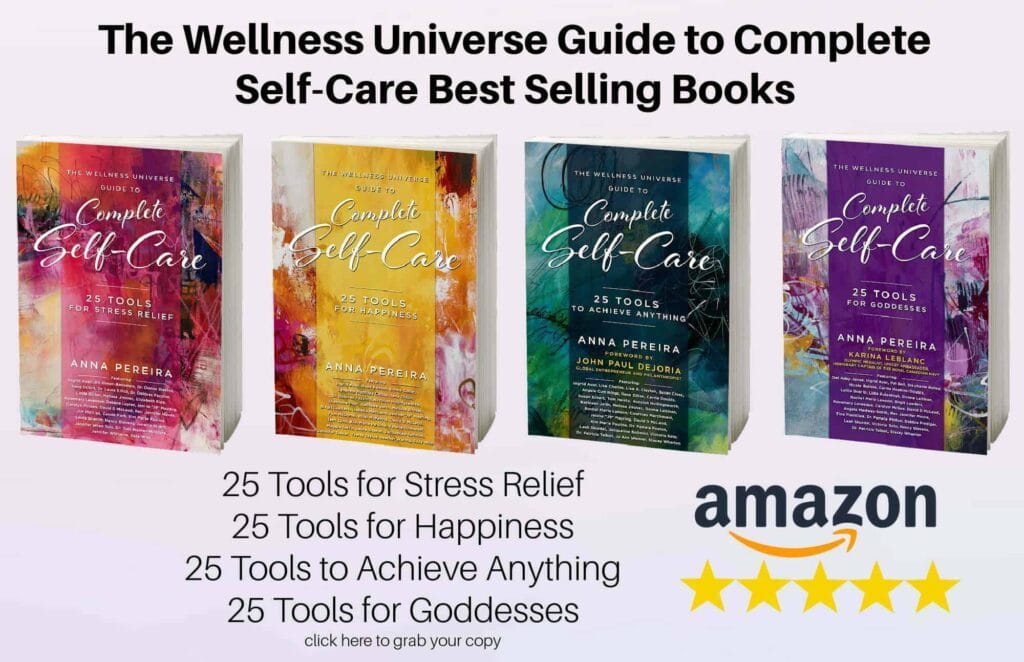
#1 Amazon Bestseller Available Now

Loss changes us—but we don’t have to navigate it alone.
The Wellness Universe Guide to Complete Self-Care: 25 Tools for Navigating Loss, Grief & Transition brings together compassionate guidance, personal stories, and practical tools from wellness professionals who understand the many ways grief can enter our lives—from death and heartbreak to identity shifts, caregiving, major life changes, and the quiet losses we don’t always know how to name.
With a foreword by Gloria Gaynor, this deeply human collection offers support for meeting change with greater tenderness, resilience, and hope.
Wherever you are in your journey, there is something here to help you take the next step.
📖 Available now on Amazon.
Buy Now for Only $1.99


Jean Voice Dart is a Certified Expressive Arts and Grief and Trauma Coach (CCF), Credentialed Expressive and Performing Arts Teacher (MS), Registered Music Therapist (RMT), and Master Level Energetic Teacher. Those working with Jean identify, embrace, and release blocked feelings and emotions through the creative, expressive, and performing arts. She has over forty years of experience in private and group sessions, helping people triumph over physical, mental, or emotional challenges.