
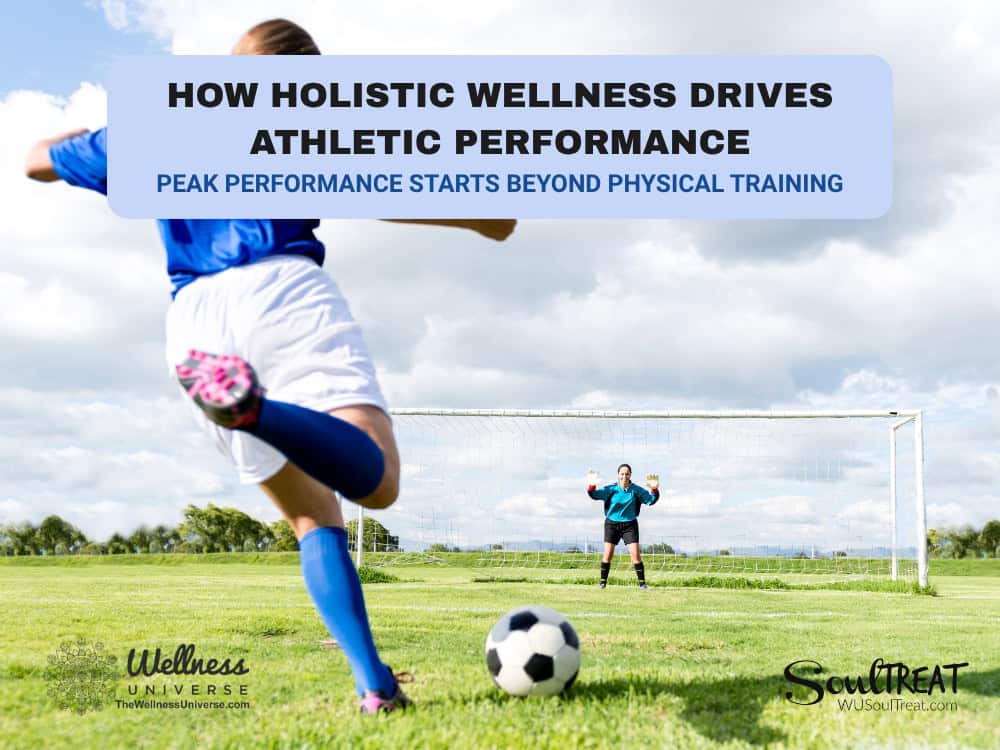
Peak Performance Starts Beyond Physical Training
Many people associate athletic success with intense training sessions, strength exercises, and technical skills. While these elements matter, they represent only one part of the picture. Holistic wellness recognizes that athletic performance is influenced by physical health, mental well-being, recovery, nutrition, sleep, and social support.
Research consistently highlights the importance of recovery and wellness in sports performance. A consensus statement published in the International Journal of Sports Physiology and Performance explains that maintaining a healthy balance between stress and recovery is essential for sustained high-level athletic performance (Kellmann et al., 2018).
Consider a marathon runner preparing for a race. If they train hard but neglect recovery, fatigue accumulates and performance eventually declines. Another athlete who balances training with proper rest often performs better over the long term.
Athletes are human beings before they are competitors. Their overall well-being shapes how they train, compete, and recover.
Quality Sleep Creates a Stronger Athlete
Sleep is one of the most overlooked components of sports wellness. Many athletes focus on workouts and nutrition while underestimating the value of a good night’s sleep.
Experts from the British Journal of Sports Medicine report that athletes who habitually sleep less than seven hours per night may experience reduced performance and poorer recovery outcomes.
During sleep, the body repairs tissues, regulates hormones, strengthens immunity, and consolidates learning. These processes directly influence athletic readiness.
Imagine a basketball player who spends hours practicing free throws. Without adequate sleep, reaction time, concentration, and decision-making can suffer. In contrast, a well-rested athlete often responds faster during critical game situations.
Sleep also contributes to injury prevention. Recent research suggests that poorer sleep metrics are associated with declines in athletic performance and may increase vulnerability to injuries in some sporting populations.
For many athletes, improving sleep habits can deliver performance gains without adding a single extra training session.
Mental Wellness Supports Consistent Results
Athletes frequently face pressure from coaches, teammates, family members, sponsors, and personal expectations. These demands can create emotional strain that affects performance.
The International Olympic Committee’s consensus statement emphasizes that mental health symptoms can impair athletic performance, increase injury risk, and delay recovery. Mental and physical health are deeply connected.
A soccer player struggling with anxiety may find it harder to focus during matches. A swimmer experiencing burnout may lose motivation despite excellent physical conditioning. These challenges demonstrate why mental wellness deserves attention alongside physical preparation.
Building mental resilience does not mean ignoring emotions. Instead, it involves developing healthy coping strategies, maintaining supportive relationships, and seeking help when necessary.
Many elite athletes now work with sports psychologists to improve confidence, concentration, and emotional balance. These practices are increasingly viewed as standard performance tools rather than signs of weakness.
Nutrition Fuels Recovery and Endurance
Food provides the energy that powers every movement an athlete makes. Proper nutrition supports muscle repair, immune function, and sustained performance throughout training and competition.
When athletes fail to meet their nutritional needs, the body struggles to recover efficiently. Energy levels drop, concentration declines, and training quality can suffer.
For example, a cyclist preparing for a long-distance event requires adequate carbohydrates to replenish energy stores. A strength athlete needs sufficient protein to support muscle repair after demanding workouts. Hydration is equally important because even mild dehydration can negatively affect physical and cognitive performance.
Nutrition should be viewed as a daily performance strategy rather than a short-term solution before competition. Consistent eating habits create a foundation that supports long-term athletic development.
Athletes who understand how their bodies respond to food often make more informed choices that enhance both health and performance.
Recovery Is Where Growth Happens
Many athletes take pride in pushing through discomfort. Determination certainly has value, but continuous stress without recovery eventually becomes counterproductive.
Sports science experts emphasize that recovery is a fundamental part of the performance process rather than an optional activity.
Recovery can include stretching, mobility work, active recovery sessions, massage therapy, mindfulness practices, and adequate sleep. These approaches help the body adapt to training demands.
Think of a tennis player who competes in multiple tournaments over several weeks. Without proper recovery, fatigue accumulates and performance begins to decline. Strategic recovery allows the athlete to maintain energy and reduce the likelihood of overtraining.
Successful athletes often understand that improvement occurs during recovery periods when the body repairs and strengthens itself.
Social Support Strengthens Athletic Success
Athletic performance does not occur in isolation. Coaches, teammates, family members, healthcare professionals, and friends all contribute to an athlete’s well-being.
Research on athlete mental health highlights the importance of supportive environments that promote both performance and wellness.
A young athlete recovering from an injury may regain confidence faster when surrounded by encouraging teammates and supportive coaches. Similarly, a professional athlete facing a difficult season may benefit from strong relationships that provide emotional stability.
Social support helps athletes manage challenges, celebrate achievements, and maintain perspective during demanding periods.
When athletes feel valued as people rather than simply performers, they are often better equipped to thrive both on and off the field.
Final Thoughts
Holistic wellness recognizes that athletic excellence is built on multiple interconnected factors. Training remains important, but it works best when supported by quality sleep, mental well-being, proper nutrition, effective recovery, and strong social connections.
The most successful athletes understand that performance is not determined by a single workout or competition. It is shaped by daily habits that support the whole person. When wellness becomes part of the athletic journey, athletes gain a stronger foundation for consistency, resilience, and long-term success.
References
- Halson, S. L., Sargent, C., Roach, G. D., Nédélec, M., Gupta, L., Leeder, J., Fullagar, H. H. K., Coutts, A. J., Lastella, M., & Walsh, N. P. (2021). Sleep and the athlete: Narrative review and 2021 expert consensus recommendations. British Journal of Sports Medicine, 55(7), 356–368. https://doi.org/10.1136/bjsports-2020-102025
- Kellmann, M., Bertollo, M., Bosquet, L., Brink, M., Coutts, A. J., Duffield, R., Erlacher, D., Halson, S. L., Hecksteden, A., Meeusen, R., Mujika, I., Robazza, C., Skorski, S., Venter, R., & Beckmann, J. (2018). Recovery and performance in sport: Consensus statement. International Journal of Sports Physiology and Performance, 13(2), 240–245. https://doi.org/10.1123/ijspp.2017-0759
- Nobari, H., Banihashemi, M., Saedmocheshi, S., Prieto-González, P., & Oliveira, R. (2023). Overview of the impact of sleep monitoring on optimal performance, immune system function and injury risk reduction in athletes: A narrative review. Physician and Sportsmedicine, 52(2), 101–110. https://doi.org/10.1177/00368504231206265
- Reardon, C. L., Hainline, B., Aron, C. M., Baron, D., Baum, A. L., Bindra, A., Budgett, R., Campriani, N., Castaldelli-Maia, J. M., Currie, A., Derevensky, J., Glick, I. D., Gorczynski, P., Gouttebarge, V., Grandner, M. A., Han, D. H., McDuff, D., Mountjoy, M., Putukian, M., … Engebretsen, L. (2019). Mental health in elite athletes: International Olympic Committee consensus statement. British Journal of Sports Medicine, 53(11), 667–699. https://doi.org/10.1136/bjsports-2019-100715
New Moon SisterCircles for Self-Care and Empowerment
Come together under the New Moon, as we celebrate our connection to the lunar cycles, to the earth, and to each other, through movement, song, personal sharing, and magical play.
Join us live – https://bit.ly/NewMoonSisterCircles
NOW AVAILABLE
SoulTreat Living My Magical Life Magazine

Grab Your Free Copy Here
A Transformational Journey Workshops

Ready for growth, healing, and inspiration?
Dive deep into the very tools and insights shared by our expert authors in The Wellness Universe Guide to Complete Self-Care, 25 Tools for Transformation! Brought to life in engaging, interactive workshops designed to empower and inspire you. Each author leads a workshop built around the
unique strategies they’ve contributed to this book, giving you firsthand
access to the wisdom behind the pages.
👉 Register here: https://bit.ly/ATJWorkshops
#1 BEST SELLER AVAILABLE NOW!
The Wellness Universe Guide to Complete Self-Care, 25 Tools for Transformation

Ready for a gentle reset with real momentum? The Wellness Universe Guide to Complete Self-Care: 25 Tools for Transformation is a 5-star Amazon favorite, and readers say,
“This book should be your bedside table guidebook.”
Open to any page, choose a tool, and let one small shift become your next breakthrough.



The Wellness Universe is your resource for health, wellness, well-being, and transformation. We serve and support professionals who make the world a better place and individuals and groups who seek their best life.
A woman owned company; having the vision in 2013, Anna Pereira launched the first directory in 2015 bringing together a community of members making the world a better place to be found by those seeking their best life. The Wellness Universe has grown since then to be a one-stop shop for total wellness support! We are a vetted community, online directory, book publisher, resource center, event producer, content platform, and so much more, supporting whole-health and well-being on a global scale.
The Wellness Universe is a home that connects industry professionals in the health, wellness, and well-being fields to seekers of total well-being. WU provides our WU World-Changer members with peer support, Wellness Universe produced events (live and online), projects, visibility, business mentoring, and community. Through The Wellness Universe our WU World-Changer members serve WU Friends, seekers of health, wellness and transformation, with coaching, workshops, content and more.
The Wellness Universe provides individuals and groups seeking their best lives with access to our members, wellness content, educational resources, and guidance in all areas of wellness to transform visions of how they want to live life into the life they experience.
Through the directory, WU Featured Blog, SoulTreat wellness retreat, Self-Care Books, group well-being programs, and online learning center, The Lounge, The Wellness Universe provides many avenues to support whole health, mind, body, spirit and planet.
Join us today! Wellness Professional or Seeker of Your Best Life

Thank you, The Wellness Universe, for this important reminder that peak performance is about so much more than physical training. I especially appreciate the emphasis on sleep, recovery, mental wellness, and supportive relationships, all of which are often overlooked but make a tremendous difference in an athlete’s ability to perform consistently.