
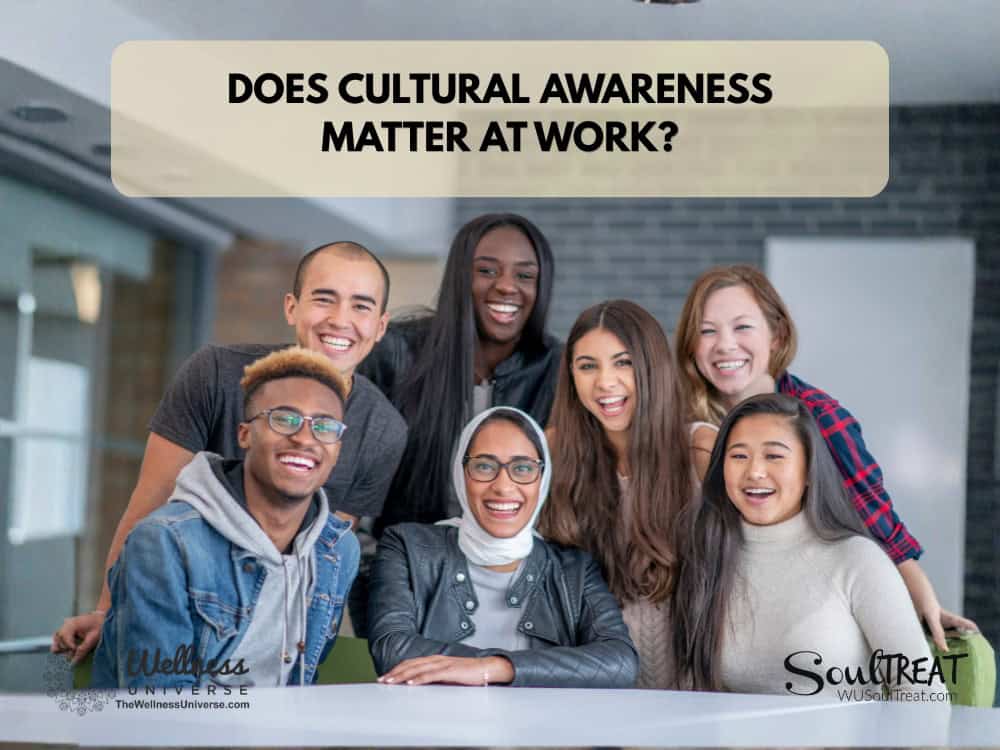
In today’s workplaces, people collaborate with colleagues, clients, and partners from a wide range of cultural backgrounds. While differences in language, customs, and communication styles can sometimes create challenges, they can also become a source of strength when approached with understanding. Cultural awareness is the ability to recognize, respect, and adapt to these differences. It helps people work together more effectively, build stronger relationships, and create environments where everyone feels valued.
Better Communication Starts with Understanding Differences
Communication problems are among the most common causes of workplace conflict. Cultural awareness helps employees understand that people may express ideas, feedback, and concerns in different ways.
Research from SHRM found that only 46% of employees believed their coworkers understood the impact of their words and behaviors on others. The same study reported that employees who experienced lower levels of social awareness from colleagues also reported lower levels of trust and respect in the workplace.
Consider a simple example. During a team meeting, one employee may speak confidently and interrupt to contribute ideas. Another employee may wait until everyone has finished speaking before sharing their thoughts. Without cultural awareness, the quieter employee might be viewed as disengaged. In reality, they may come from a background where waiting one’s turn is considered respectful.
Small misunderstandings like these occur every day. When employees learn to interpret behavior through a broader cultural lens, communication becomes clearer and workplace relationships improve.
Cultural Awareness Helps People Feel They Belong
Most employees want more than a paycheck. They want to feel respected, included, and appreciated for who they are.
According to Gallup data highlighted by Harvard Business Impact, employee engagement has declined in recent years, with only about 32% of employees reporting that they feel engaged at work. Organizations continue searching for ways to improve connection and commitment among their workforce.
Cultural awareness contributes to a stronger sense of belonging because people feel seen rather than judged. Employees are more likely to participate, share ideas, and collaborate when they believe their perspectives are welcomed.
Imagine a new employee who has recently moved from another country. They may celebrate different holidays, have a different accent, or follow different workplace norms. A culturally aware manager takes time to learn about those differences rather than expecting immediate conformity. That simple effort can make the employee feel comfortable much faster.
Workplaces become stronger when people do not feel pressured to hide important parts of their identity.
Diverse Perspectives Lead to Better Ideas
Innovation rarely happens when everyone thinks the same way. Different experiences often lead to different solutions.
A study published in the International Journal of Innovation Science found that cultural diversity can have a significant positive impact on innovation performance when teams are managed effectively. Researchers concluded that diverse perspectives create opportunities for stronger problem-solving and idea generation.
Another meta-analysis examining culturally diverse teams found that deeper forms of diversity, such as different values, experiences, and viewpoints, were positively associated with creativity and innovation.
Think about a marketing team developing a campaign for a global audience. Team members from different cultural backgrounds may notice concerns, opportunities, or customer preferences that others miss. One person’s insight could prevent an expensive mistake. Another person’s experience could inspire a completely new approach.
When cultural awareness exists, employees are more willing to share those unique perspectives. As a result, organizations gain access to a broader range of ideas.
Stronger Teams Build Greater Business Success
Cultural awareness is often viewed as a social skill, yet it also has practical business value.
Research from McKinsey examining more than 1,000 companies across 12 countries found that organizations with higher levels of ethnic and cultural diversity in leadership were 33% more likely to outperform their peers on profitability.
The reason is fairly straightforward. Diverse teams often understand diverse customers better. They can identify emerging needs, recognize blind spots, and make decisions using a wider range of information.
For example, a company expanding into a new international market may avoid costly cultural mistakes when employees with local knowledge contribute to planning discussions. A product that succeeds in one country may require adjustments in another. Cultural awareness helps teams recognize these differences before problems arise.
Businesses that value cultural understanding position themselves to serve increasingly diverse communities and customers.
Cultural Awareness Reduces Conflict and Builds Trust
Many workplace disagreements are not caused by bad intentions. They arise because people interpret behavior differently.
SHRM research indicates that ideological, social, and cultural differences frequently contribute to workplace tensions and misunderstandings. Clear communication and cultural understanding can prevent many of these issues from escalating.
Trust develops when employees believe that colleagues are trying to understand them rather than judge them. Cultural awareness encourages curiosity instead of assumptions.
Suppose a manager notices that an employee avoids direct eye contact during conversations. Without cultural awareness, the manager might interpret this behavior as dishonesty or a lack of confidence. In some cultures, however, avoiding prolonged eye contact is a sign of respect.
Learning these distinctions reduces unnecessary conflict and helps teams focus their energy on productive work rather than misunderstandings.
Cultural Awareness Is a Skill Anyone Can Develop
Many people assume cultural awareness requires expert knowledge of every culture. That is not realistic. No one can know everything about every background.
The goal is much simpler. It involves listening carefully, asking respectful questions, remaining open-minded, and recognizing that our own experiences are not universal.
Employees can start by becoming curious about how others prefer to communicate. Managers can encourage inclusive meetings where different viewpoints are welcomed. Organizations can provide opportunities for cross-cultural learning and collaboration.
These actions may seem small, yet they often have a lasting impact.
As workplaces become increasingly connected across countries, generations, and communities, cultural awareness is becoming an essential professional skill. It strengthens communication, improves teamwork, encourages innovation, and helps employees feel valued. In the end, cultural awareness is not simply about understanding differences. It is about creating workplaces where people can do their best work together.
References
- McKinsey & Company. (2018). Delivering through diversity. https://www.mckinsey.com/capabilities/people-and-organizational-performance/our-insights/delivering-through-diversity
- Teitelbaum, A. (2025, June 5). Top mistakes made in communicating inclusion and diversity goals. Society for Human Resource Management. https://www.shrm.org/in/enterprise-solutions/insights/top-mistakes-made-communicating-inclusion-diversity-goals
- Society for Human Resource Management. (2020). Addressing the six sources of workplace cultural conflicts. https://www.shrm.org/topics-tools/news/inclusion-diversity/addressing-six-sources-workplace-cultural-conflicts
- Santos, S. (2022). Employee engagement: Our favorite reads. Harvard Business Impact. https://www.harvardbusiness.org/insight/employee-engagement-our-favorite-reads/
- Parrotta, V., Pozzoli, D., & Pytlikova, M. (2020). Cultural diversity drives innovation: Empowering teams for success. International Journal of Innovation Science, 12(3), 323–343. https://doi.org/10.1108/IJIS-04-2020-0042
- Wang, J., Cheng, G. H. L., Chen, T., & Leung, K. (2019). Team creativity/innovation in culturally diverse teams: A meta-analysis. Journal of Organizational Behavior. https://research.ubc.ca/content/team-creativityinnovation-culturally-diverse-teams-meta-analysis
NOW AVAILABLE
SoulTreat Living My Magical Life Magazine

Grab Your Free Copy Here
A Transformational Journey Workshops
Ready for growth, healing, and inspiration?
Dive deep into the very tools and insights shared by our expert authors in The Wellness Universe Guide to Complete Self-Care, 25 Tools for Transformation! Brought to life in engaging, interactive workshops designed to empower and inspire you. Each author leads a workshop built around the
unique strategies they’ve contributed to this book, giving you firsthand
access to the wisdom behind the pages.
👉 Register here: https://bit.ly/ATJWorkshops
#1 BEST SELLER AVAILABLE NOW!
The Wellness Universe Guide to Complete Self-Care, 25 Tools for Transformation
Ready for a gentle reset with real momentum? The Wellness Universe Guide to Complete Self-Care: 25 Tools for Transformation is a 5-star Amazon favorite, and readers say,
“This book should be your bedside table guidebook.”
Open to any page, choose a tool, and let one small shift become your next breakthrough.


The Wellness Universe is your resource for health, wellness, well-being, and transformation. We serve and support professionals who make the world a better place and individuals and groups who seek their best life.
A woman owned company; having the vision in 2013, Anna Pereira launched the first directory in 2015 bringing together a community of members making the world a better place to be found by those seeking their best life. The Wellness Universe has grown since then to be a one-stop shop for total wellness support! We are a vetted community, online directory, book publisher, resource center, event producer, content platform, and so much more, supporting whole-health and well-being on a global scale.
The Wellness Universe is a home that connects industry professionals in the health, wellness, and well-being fields to seekers of total well-being. WU provides our WU World-Changer members with peer support, Wellness Universe produced events (live and online), projects, visibility, business mentoring, and community. Through The Wellness Universe our WU World-Changer members serve WU Friends, seekers of health, wellness and transformation, with coaching, workshops, content and more.
The Wellness Universe provides individuals and groups seeking their best lives with access to our members, wellness content, educational resources, and guidance in all areas of wellness to transform visions of how they want to live life into the life they experience.
Through the directory, WU Featured Blog, SoulTreat wellness retreat, Self-Care Books, group well-being programs, and online learning center, The Lounge, The Wellness Universe provides many avenues to support whole health, mind, body, spirit and planet.
Join us today! Wellness Professional or Seeker of Your Best Life

This is such an important reminder that cultural awareness is about more than understanding differences. It is about creating an environment where people feel respected, valued, and comfortable bringing their full selves to the table. I especially appreciated the examples showing how easily misunderstandings can happen when we view others only through our own experiences. When we approach one another with curiosity, openness, and a willingness to learn, stronger relationships, better collaboration, and greater innovation naturally follow.