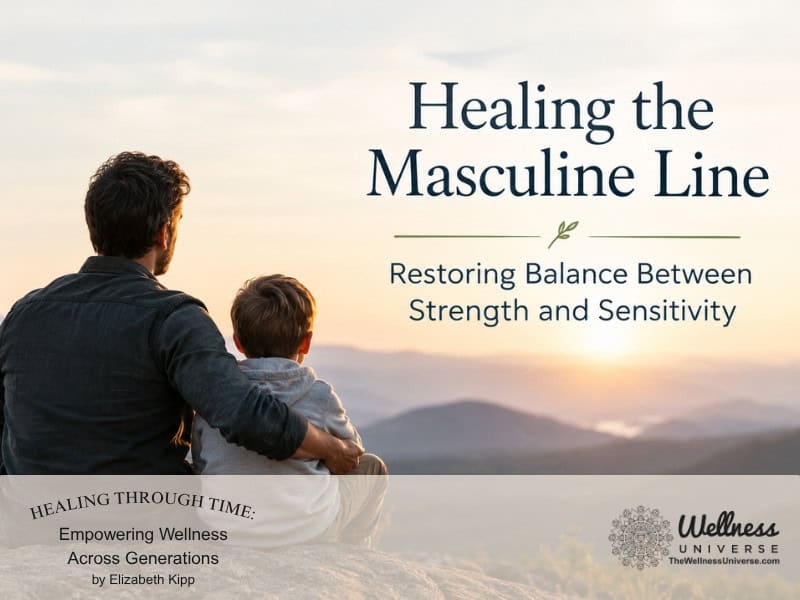
For generations, many of us have inherited an incomplete understanding of what strength means.
We have been taught to equate strength with stoicism, emotional restraint, relentless productivity, and the ability to bear life’s burdens without complaint. While these qualities may once have served as survival strategies, they often exact a tremendous cost. Beneath the surface of many families lies a history of men who learned that vulnerability was dangerous, tenderness was weakness, and asking for help was unacceptable.
The consequences of these beliefs ripple far beyond the men who first held them. They shape relationships, influence parenting, affect nervous system regulation, and become woven into family patterns passed from one generation to the next.
Healing the masculine line is not about blaming fathers, grandfathers, or the men who came before us. It is about understanding the conditions that shaped them and choosing a different path. It is an invitation to restore balance among strength and sensitivity, courage and compassion, and action and presence.
This work benefits everyone because each of us carries both masculine and feminine qualities. Whether you identify as a man or a woman, the wounded masculine archetype may be shaping how you approach life, relationships, work, and even your own healing.
Understanding the Wounded Masculine
The healthy masculine provides structure, protection, integrity, discernment, and purposeful action. It fosters safety rather than fear. It stands firmly in truth while remaining open to connection.
The wounded masculine develops when survival supplants presence. It often appears as emotional suppression, control, perfectionism, aggression, hyper-independence, or the relentless belief that worth must be earned through achievement. Sometimes it manifests more quietly as emotional withdrawal, chronic workaholism, avoidance, or an inability to receive love and support.
These behaviors are not signs of weakness or moral failure. They are intelligent adaptations that once helped someone survive difficult circumstances.
Many men inherited the message that emotions were dangerous. Tears were discouraged, fear was hidden, and tenderness was ridiculed. Entire generations learned to endure unimaginable hardship without the emotional support needed to process their experiences.
The nervous system adapted accordingly. What began as protection gradually became identity.
Inherited Survival Patterns
One of the most profound realizations in trauma recovery is that many of the patterns we carry did not originate with us. We inherit more than eye color and physical characteristics. We inherit beliefs about safety, love, belonging, success, responsibility, and emotional expression. We also inherit nervous system responses shaped by family dynamics, attachment patterns, and stress physiology, and, increasingly, research suggests, by intergenerational trauma.
Some inherit a legacy of silence. Others inherit emotional volatility. Still others inherit perfectionism, hypervigilance, addiction, emotional absence, or the belief that love must be earned through performance. These patterns often become so familiar that they feel like personality rather than an adaptation.
Healing begins when we ask a compassionate question:
“Whose burden am I carrying?”
This question is not about assigning blame. It is about bringing awareness to unconscious patterns that have quietly shaped our lives.
The Cost of Emotional Armor
The wounded masculine often wears emotional armor so consistently that it becomes invisible. Armor protects, but it also isolates. And we cannot protect and connect at the same time. When vulnerability feels unsafe, genuine intimacy becomes difficult. Relationships become centered on roles rather than authentic connection. Conversations remain on the surface because deeper emotional truth feels unfamiliar or threatening.
The irony is that the very strategies designed to protect us often become the source of our suffering. The body pays the price as well, expressing itself with such reactions as chronic muscle tension, hypervigilance, digestive disturbances, chronic stress, and difficulty resting. The nervous system remains prepared for danger long after the danger has passed. The body faithfully remembers the conditions it believes are necessary for survival.
Redefining Strength
One of the greatest gifts we can offer ourselves is redefining what strength truly means. Strength is not the absence of emotion. It is the capacity to remain present with emotion without becoming overwhelmed by it. Strength means setting healthy boundaries with kindness, admitting when we need support, and apologizing when we’ve caused harm.
Strength is also about protecting others without controlling them and remaining rooted in integrity while allowing compassion to guide our actions.
Healthy strength creates safety for everyone around it. It does not dominate or intimidate. It invites trust. This is the masculine energy our world desperately needs.
Compassion Is Not the Opposite of Courage
People can unconsciously believe they must choose between being compassionate and being courageous. In reality, authentic courage grows from compassion. Without compassion, courage can become force. Without courage, compassion can become passivity. Together they create wise action.
This balance becomes especially important when healing family wounds. It takes courage to acknowledge painful patterns that have existed for generations. It takes compassion to recognize that those who came before us were often doing the best they could with the awareness and resources available to them. Holding both truths simultaneously is where healing begins.
Healing the Father Wound
Whether our fathers were physically absent, emotionally unavailable, highly critical, or simply overwhelmed by their own unresolved pain, many of us carry what is commonly called the father wound.
This wound may reveal itself through perfectionism, people-pleasing, fear of authority, difficulty trusting ourselves, chronic self-criticism, or an ongoing search for external validation.
Healing does not necessarily require confrontation or excusing harmful behavior. Healing asks us to understand that wounded people often transmit wounds they never intended to pass along.
As compassion grows, blame begins to soften, not because the past changes, but because we refuse to let it define our future.
The Role of Ancestral Healing
One of the most meaningful aspects of my work involves helping people explore inherited survival patterns through Ancestral Clearing.
I approach this work as both grounded and spacious.
Trauma affects nervous systems across generations through behavior, attachment, family dynamics, stress physiology, and emotional conditioning. Beyond these measurable influences, many people also experience inherited emotional burdens that seem to extend beyond their personal biography. Ancestral Clearing invites us to gently explore these patterns with curiosity rather than fear.
The goal is not to rewrite history, but to release what no longer belongs in the present.
Clients often describe feeling lighter, calmer, and more fully themselves after this work, because they released burdens that were never entirely theirs in the first place.
Healing the masculine line often means releasing inherited expectations about what it means to be a man, a provider, a protector, or even a human being. It creates room for a healthier expression of masculine energy – one rooted in presence instead of pressure.
Practical Ways to Restore Balance
Healing the masculine line is not accomplished through insight alone. The nervous system learns through lived experience. Begin by noticing where emotional armor appears in your own life.
Do you rush to solve problems instead of listening?
Do you equate rest with laziness?
Is vulnerability uncomfortable?
Awareness is the first act of transformation.
Create moments of stillness each day. Whether through meditation, breathwork, prayer, or simply sitting quietly in nature, stillness allows the nervous system to shift from constant vigilance toward regulation.
Practice speaking honestly about your emotional experience without needing to fix it. Even a simple statement like, “I’m feeling overwhelmed today,” begins creating new neural pathways that associate vulnerability with safety rather than danger.
Notice where compassion can replace judgment. Many survival patterns persist because they are fueled by shame. Compassion interrupts that cycle.
Finally, remember that healing rarely happens in isolation. Safe relationships provide experiences that teach the nervous system a new possibility: connection without fear.
Becoming the Turning Point
Every family tree contains both wounds and wisdom. While we cannot change what happened before us, we can change what continues through us. Someone becomes the turning point. Perhaps that someone is you.
Healing the masculine line is not about rejecting strength. It is about restoring its original purpose. True strength protects without controlling. It leads without dominating, listens as deeply as it speaks, and acts from wisdom rather than fear. It understands that courage and tenderness are not opposites but partners.
As we restore balance between strength and sensitivity within ourselves, we also offer that possibility to future generations. Children learn emotional safety by experiencing it. Families begin changing not through grand declarations but through countless small moments of presence, honesty, and compassion.
The masculine line does not need perfection. It needs healing.
And healing begins the moment we recognize that the greatest act of courage is not hardening our hearts against pain, but opening them enough to transform it.
When we do, we become living proof that inherited survival patterns do not have to become inherited destinies.
We create a new legacy – one where strength walks hand in hand with sensitivity, where compassion deepens courage, and where future generations inherit not only resilience, but the freedom to be fully human.
Connect with Elizabeth on The Wellness Universe and follow her on Facebook and Instagram.
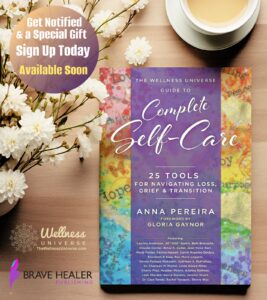
COMING SOON!
The Wellness Universe Guide to Complete Self-Care:
25 Tools for Navigating Loss, Grief and Transition
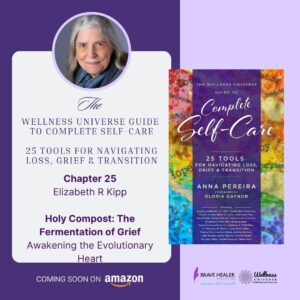
The Wellness Universe Guide to Complete Self-Care, #1 Bestselling book series brings more well-being support to you soon. 25 Tools for Navigating Loss, Grief & Transition available soon. Sign up now for free gifts and win a prize in our Mega Wellness Prize Bonanza – Over $20,000 in prizes & everyone will win:
👉 Join Our Launch Team & Win Prizes
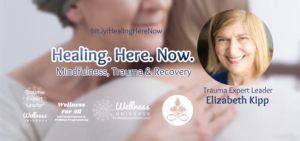
Healing. Here. Now. Mindfulness, Trauma, and Recovery is a course for self-care and healing brought to you in partnership with Elizabeth Kipp, Founder of Elizabeth Kipp Stress Management, LLC and Wellness Universe Trauma Expert Leader exclusively for Wellness for All programming.
Catch the replay – https://bit.ly/HealingHereNow
A Transformational Journey Workshops
Unlock the full transformational journey with all 29 powerful workshops!

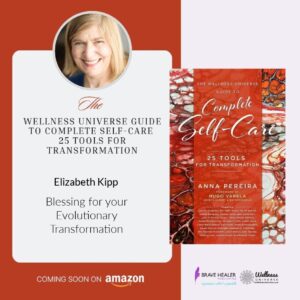
Blessing for Your Transformation
with Elizabeth Kipp
Step into a powerful journey of healing and renewal with a live reading of Blessing for Your Evolutionary Transformation from the #1 best-selling book series The Wellness Universe Guide to Complete Self-Care: 25 Tools for Transformation. Release what no longer serves you, reconnect with your inner strength, and rediscover your purpose with clarity and peace. Join live for an inspiring experience of growth, conversation, and transformation—you don’t want to miss it!
#1 BEST SELLER AVAILABLE NOW!
The Wellness Universe Guide to Complete Self-Care, 25 Tools for Transformation
Ready for a gentle reset with real momentum? The Wellness Universe Guide to Complete Self-Care: 25 Tools for Transformation is a 5-star Amazon favorite, and readers say,
“This book should be your bedside table guidebook.”
Open to any page, choose a tool, and let one small shift become your next breakthrough.

Elizabeth is a Health Facilitator, Empowerment Coach, EFT/Tapping and Ancestral Clearing Practitioner, and Kundalini Yoga Teacher, helping people to step into the power of their own healing. She has turned her attention as a patient advocate and health facilitator in service to the alarmingly high population of people who suffer from stress, chronic pain, and the quest for a life free from suffering.