Raising curious, confident, and emotionally resilient children in a world where answers are only a click away.
Convenient? Absolutely. But it raises an interesting question: When children can find answers to almost anything, how do we help them develop the confidence to think for themselves?
From search engines and recommendation algorithms to artificial intelligence, technology has made information wonderfully accessible. The challenge for parents is not to keep children away from these tools, but to ensure they continue developing the cognitive and emotional skills that make independent thinking possible.
Understanding the Age of Outsourced Thinking
Outsourced thinking, sometimes called cognitive offloading, happens when we rely on external tools to perform mental tasks, such as remembering information, solving problems, or making decisions.
This is not necessarily harmful. Humans have always used tools to extend their abilities. However, researchers have found that when people expect information to remain digitally accessible, they may remember less of the information itself and more about where to find it.[1]
More recently, a 2025 study involving nearly 1,000 high school students examined how AI-assisted mathematics learning influenced performance. Students using unrestricted AI assistance performed better during practice but worse on subsequent independent assessments. Interestingly, AI tools designed to provide hints rather than answers largely avoided this negative effect.[2]
The lesson is encouraging: Technology can support learning, but children still need opportunities to do the thinking.
Why Independent Thinking Matters for Emotional Wellness
Thinking independently involves more than academic achievement. It helps children develop patience, confidence, adaptability, and emotional resilience.
Consider a child struggling to complete a puzzle. They might become frustrated, try several approaches, and eventually discover a solution. That experience teaches something beyond problem-solving: frustration can be manageable, mistakes can be useful, and persistence can lead somewhere.
These experiences support executive functioning, the mental skills responsible for attention, working memory, self-control, and flexible thinking.
According to Harvard University’s Center on the Developing Child, executive functioning develops through practice, supportive relationships, and age-appropriate challenges.[3]
When children encounter manageable difficulties and work through them with encouragement, they practice skills that extend beyond the classroom.
Creating a Home That Encourages Thinking
Fortunately, supporting children’s minds does not require complicated educational activities or strict technology restrictions. Small changes in everyday interactions can make a meaningful difference.
Make Room for Questions Before Answers
The next time your child asks why the sky changes color or how something works, resist the temptation to immediately provide an explanation.
Instead, try asking, “What do you think might be happening?”
This simple invitation encourages observation, imagination, and reasoning.
Research published in Psychological Science found that back-and-forth conversations between children and adults were associated with stronger language-related brain activity and verbal abilities.[4]
Conversations, therefore, offer something that instant answers cannot always provide: opportunities for children to organize and express their thoughts.
Let Children Experience Productive Struggle
Not every difficulty needs an immediate solution.
If your child struggles with homework, offer guidance without completing the task for them. Ask which part feels confusing, encourage another approach, or help break the problem into smaller steps.
Educational research supports techniques such as practice testing and retrieving information from memory rather than simply rereading or receiving answers.[5]
The goal is not to make learning unnecessarily difficult. It is to help children discover that effort is a natural part of learning.
Teach Children to Use Technology as a Partner
Instead of treating AI as an enemy, teach children how to use it thoughtfully.
For example, rather than asking an AI tool to write an entire essay, a teenager could ask it to suggest questions that strengthen their argument.
Similarly, a child learning mathematics could request hints rather than complete solutions.
Encourage children to ask themselves: “Does this answer make sense? What might be missing? Can I explain it in my own words?”
These habits help children develop healthy skepticism without discouraging their curiosity about technology.

Children also need opportunities to play, move, connect, rest, and experience life away from structured activities.
A neighborhood walk, an imaginative game, cooking together, or an unhurried conversation can provide experiences that digital information cannot replace.
The American Academy of Pediatrics recommends considering not only what children consume digitally, but also whether media use displaces sleep, physical activity, relationships, and other important developmental experiences.[6]
Importantly, parents can approach this balance with flexibility rather than guilt.
A family movie night, an educational video, or a shared online discovery can be enriching. What matters is the broader pattern of how children spend their time and how supported they feel.
Raising Children Who Trust Their Own Minds
Perhaps the greatest gift parents can offer is the reassurance that their children’s thoughts matter, even when those thoughts are incomplete, uncertain, or mistaken.
Listen to their unusual theories. Invite their opinions. Allow them to make age-appropriate decisions and occasionally change their minds.
And when they make mistakes, focus on what they discovered rather than how quickly they reached the correct answer.
We cannot predict every technological change our children will encounter. Nor do we need to.
What we can do is nurture curiosity, emotional security, critical thinking, and the confidence to approach unfamiliar situations.
The future will undoubtedly offer our children more powerful tools for finding answers. Our role is to help them develop the wisdom, independence, and self-trust to decide what to do with those answers.
The Wellness Universe has experienced mentors and wellness experts who provide holistic healing and support. If you need assistance, you can find our experts on The Wellness Universe website.
Endnotes and References
- Sparrow, Betsy, Jenny Liu, and Daniel M. Wegner. “Google Effects on Memory: Cognitive Consequences of Having Information at Our Fingertips.” Science 333, no. 6043 (2011): 776–778. https://doi.org/10.1126/science.1207745.
- Bastani, Hamsa, et al. “Generative AI without Guardrails Can Harm Learning: Evidence from High School Mathematics.” Proceedings of the National Academy of Sciences 122, no. 26 (2025): e2422633122. https://doi.org/10.1073/pnas.2422633122.
- Center on the Developing Child at Harvard University. Enhancing and Practicing Executive Function Skills with Children from Infancy to Adolescence. 2014. https://developingchild.harvard.edu/resources/handouts-tools/activities-guide-enhancing-and-practicing-executive-function-skills/.
- Romeo, Rachel R., et al. “Beyond the 30-Million-Word Gap: Children’s Conversational Exposure Is Associated with Language-Related Brain Function.” Psychological Science 29, no. 5 (2018): 700–710. https://doi.org/10.1177/0956797617742725.
- Dunlosky, John, et al. “Improving Students’ Learning with Effective Learning Techniques: Promising Directions from Cognitive and Educational Psychology.” Psychological Science in the Public Interest 14, no. 1 (2013): 4–58. https://doi.org/10.1177/1529100612453266.
- Munzer, Tiffany, et al. “Digital Ecosystems, Children, and Adolescents: Policy Statement.” Pediatrics 157, no. 2 (2026): e2025075320. https://doi.org/10.1542/peds.2025-075320.
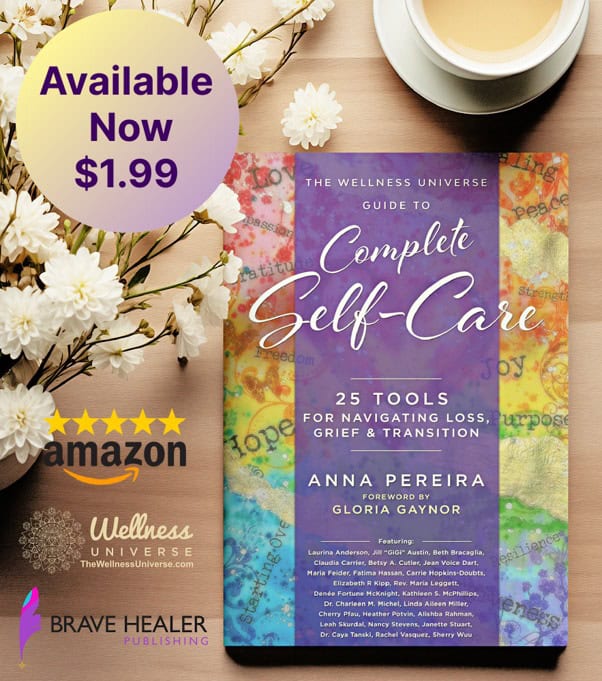
#1 Amazon Bestseller Available Now
The Wellness Universe Guide to Complete Self-Care:
25 Tools for Navigating Loss, Grief and Transition

Loss changes us—but we don’t have to navigate it alone.
The Wellness Universe Guide to Complete Self-Care: 25 Tools for Navigating Loss, Grief & Transition brings together compassionate guidance, personal stories, and practical tools from wellness professionals who understand the many ways grief can enter our lives—from death and heartbreak to identity shifts, caregiving, major life changes, and the quiet losses we don’t always know how to name.
With a foreword by Gloria Gaynor, this deeply human collection offers support for meeting change with greater tenderness, resilience, and hope.
Wherever you are in your journey, there is something here to help you take the next step.
📖 Available now on Amazon.
Get Your Copy Today for only $1.99!

High Vibration Living: Leaders Bridging Inner & Outer Peace
The Wellness Universe presents Leah Skurdal, Resilience Event Leader, Reset Meditation Guide, and Visionary Thought Leader, holding space and guiding you through High Vibration Living: Leaders Bridging Inner & Outer Peace. A program for heart-led leaders to connect and grow, brought to you in partnership with Wellness for All programming.
Watch on Demand: https://bit.ly/HighVibrationLiving




The Wellness Universe is your resource for health, wellness, well-being, and transformation. We serve and support professionals who make the world a better place and individuals and groups who seek their best life.
A woman owned company; having the vision in 2013, Anna Pereira launched the first directory in 2015 bringing together a community of members making the world a better place to be found by those seeking their best life. The Wellness Universe has grown since then to be a one-stop shop for total wellness support! We are a vetted community, online directory, book publisher, resource center, event producer, content platform, and so much more, supporting whole-health and well-being on a global scale.
The Wellness Universe is a home that connects industry professionals in the health, wellness, and well-being fields to seekers of total well-being. WU provides our WU World-Changer members with peer support, Wellness Universe produced events (live and online), projects, visibility, business mentoring, and community. Through The Wellness Universe our WU World-Changer members serve WU Friends, seekers of health, wellness and transformation, with coaching, workshops, content and more.
The Wellness Universe provides individuals and groups seeking their best lives with access to our members, wellness content, educational resources, and guidance in all areas of wellness to transform visions of how they want to live life into the life they experience.
Through the directory, WU Featured Blog, SoulTreat wellness retreat, Self-Care Books, group well-being programs, and online learning center, The Lounge, The Wellness Universe provides many avenues to support whole health, mind, body, spirit and planet.
Join us today! Wellness Professional or Seeker of Your Best Life