
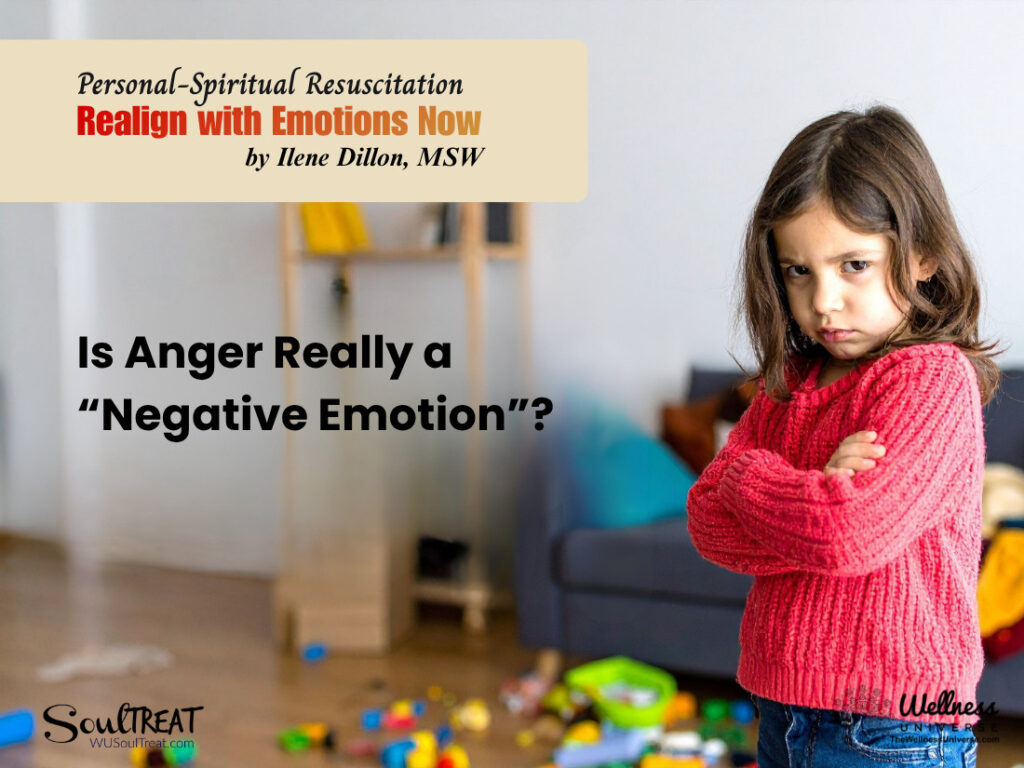
Whenever I hear someone refer to anger, guilt, depression or fear as “negative emotions,” I wince.
That’s like saying that clean mountain water flowing in a brook is “negative.” Water, after all, is energy, just like electricity and wind. They are not inherently “negative.” They just “are.”
One reason we feel okay about referring to anger as a “negative emotion” is our lack of agreement about what emotions really are. After 54 years of studying and working with anger, I know that emotions are energy. Anger is energy, just like water, wind and electricity. None of these is inherently “negative.” As energy, they just “are.”
You might argue that water, wind and electricity can become destructive, becoming “negative.” Yes, they become destructive. Water bursting through a dam and flooding land below it can be devastatingly destructive. So can wind that reaches high speeds, or electricity that erupts in fire.
It’s certainly true: energy can become destructive, but requires unnatural conditions.
Anger can be destructive, too. It can destroy self-esteem, block external success, and destructively feed our ego. Anger has also been proven to be a “killer.” Research has revealed anger as one of the causes of diseases like diabetes, heart and circulatory illnesses, and cancer. Anger, held onto, can be all of these. Yet we also need to change the conditions of anger for these to happen. First, we need to hold onto anger, allowing it to grow in power. Given the opportunity to escape from the vessels in which it’s held (the human mind and body), it can become powerful enough to kill us.
Water, wind and electricity are not, in their natural state, “negative.”
Anger, in its natural state, is not “negative.”
All of these become destructive in “outside-of-normal” circumstances.
Have We Been Taught to Live Life “Backwards”?
In recent years, I’ve been struck by what I see as “misinformation” that we humans have been given about how the world (and our own systems) works.
Several years ago, I was asked to participate in an online Summit offered by my friend and colleague, Iris Benrubi, aimed at helping women to “find” love so they could become more fulfilled and happier. Looking at what I’d been taught about “finding love,” I realized a lot of that information is not what I had seen actually successful for myself or my psychotherapy clients when we sought love.
Here’s what I mean: Let’s imagine you feel you need more love in your personal life. Willing to do what is suggested to “find” love for yourself, you join this hunt. Immediately, you’re identifying that something is missing inside of you—you don’t have “enough” love!
For years, I had been teaching people, as I helped them to create the lives they wanted, this principle: “What you have inside of you, you tend to attract from outside of you.”
The way this works when we “seek” love is that when I found “something missing—a lack” inside of me, going outside of me to fill that lack led me to a problem. “Outside,” I was most likely to find another person with the same kind of “lack” inside of them. I saw myself as “missing” all the love I needed, and I would attract a person who saw themselves as “missing” all the love they needed!
Suddenly, our divorce statistics made more sense to me. “What happens,” I asked myself, “on the days when I’m really feeling the lack of love in me (and want my partner to fill that empty place), and those are the same days my partner is acutely aware of their own lack of love? Not a good day for either of us! Neither of us could actually fill the love needs of either of us!
Does this make sense to you? Could it be true? Would the world be created in such a way that when we behaved the way we were taught, we could be guaranteed not to get what we believed we needed?
I experienced a very challenging early childhood, leading me to believe I was unlovable! My first husband (married at age 19) had filled some of that need in me. He told me “I love you,” then proved it by marrying me. Alas, we didn’t stay married for more than 8 years, which proves my point. Neither of us had felt fully loved, which eventually blocked our ability to satisfactorily live and share life together.
Going out to “find love” from outside of me, I realized, didn’t work reliably. I could see that my culture had been shaping me to live my life from the “Outside, in.” My culture said, “Go outside of yourself, find what you believe you need, and bring that back into yourself.”
I had done that, and it had not worked (and, BTW, in my lifetime I’ve been married 3 times—twice the “Outside, in” approach had failed for me).
So, I began to think: “If I could love myself, I would at least have love that belongs to me, that nobody could take away!”
I consulted trusted people who offered me ideas about how to love myself. It was a slow, challenging process, but today I experience unmistakable evidence in my life that I am a lovable person—and a loved person!
I’d been actively applying that principle in my life: What you have inside of you, you tend to attract from outside of you, but not by bringing needed experiences inside of me, first. I changed my approach, deciding to live life from the “Inside, out.” As a result, the amount of love I exchanged and received rose exponentially! I developed much more love for myself by starting with loving myself!
You may ask, what’s this got to do with anger?
What We’ve Been Taught to Do About and With Anger
“You made me angry!” “This is your fault!” Such words are frequently spoken when someone experiences anger. It’s “Outside, in” thinking: “I’m feeling angry. You said or did something, and right after that, I felt angry. Therefore, you ‘caused’ me to feel angry!”
As we’ll discuss in future blogs on Anger, nobody else makes us feel angry. Another person can stimulate what emotions arise inside us, but we do not experience anger unless we’re already set up to connect with it.
We’ve been taught to believe that “outside people/forces” cause us to feel angry. That then gives us permission to tell others they need to make changes, so that we don’t feel angry! And how angry do we feel if those other people decide not to cooperate with our request/demand? And what can we do about their refusal?
Here’s the question: “What if anger is an ‘inside job?’ What if anger triggers are set up inside ourselves, so that when we experience the feeling of anger, it’s something about us, and not about the other person?” How might this change how we understand anger, work with it, and put ourselves in charge of it?
When we accept this, we’re moving to explaining anger in an “Inside, out” way, which changes everything!
In Blog #2 of this series, we’ll go into what I refer to as “The Universal Cause of Anger.” For now, I want to bring your attention to two important things.
- As we have stated, emotions—including anger—are Energy.
- When we hold onto energy—block its movement—it tends to build up.
What We Know About Energy and Emotions
Basic science classes tell us this:
- Energy cannot be created or destroyed.
- Energy needs to move.
- When energy moves, it can be transformed into another form of energy.
If emotions are energy, then we also know:
- Emotions cannot be created or destroyed.
- Emotions need to move.
- When emotions move, they can be transformed into another form of emotion.
If we cannot create anger or destroy it… then it means when anger shows up, we must deal with it. It’s not going to disappear! (And maybe, as we’ll discuss next Blog, anger has a purpose useful to us!)
If emotions need to move, then the “Outside, in” precautions we’ve been given to hold onto anger, to keep it inside of ourselves in many circumstances, means we’re being taught to work against anger’s basic nature! How can this be a good thing?
Do you have an idea of what other form of energy anger can transform into? What can happen if we transform anger’s energy instead of merely holding onto it?
When we block the movement of water by building a dam across a creek or river, what happens? The water blocked from moving begins to back up, forming a lake. Only if the dam holding the water back is damaged or destroyed will that water become destructive.
When we block the movement of emotions, by carefully holding anger inside of us so we’re not embarrassed, hurtful to others, or “out of control,” what happens? The energy of anger blocked from moving begins to back up, forming blockages inside of us!
Furthermore, anger is the “most active” emotion we experience, meaning it never stops trying to move. Inside of us, it keeps seeking a way out, on a constant search to escape through weak spots, resulting in such illnesses as “liver cancer,” “pancreatic cancer,” or “lung cancer.”
When I was diagnosed with a slow-growing breast cancer in 2017, I opted to take a year to see if I could heal it. One thing I did was work to release any anger I may have been holding inside. After a year, I was not successful in totally healing the cancer, but in that year, the cancer did not grow. In March of 2018, it was surgically removed. I never took medication or received chemotherapy or radiation treatment. It’s been 8 years, with no recurrence.
The cancer I developed was discovered a year after my husband died, having suffered for 4 and a half years with prostate cancer. I was told later that women whose husbands have “long” illnesses very often develop breast cancer. He stayed home and died with dignity. Even though it was my honor to do that, as a person to whom “freedom” is very important, I realized that my lack of felt freedom during that time was enough to stimulate the development of breast cancer!
When we work with energy, we can get water, wind or electricity to work for us.
What about when we work with emotions, such as anger? Can anger work for us, too? My work with breast cancer confirmed to me that it can.
In our next Post about Anger, I’ll share with you what I’ve learned causes anger, how to identify specific causes, and steps for working with the anger you experience. We’ll also talk about who “owns” anger!
In subsequent Blogs, we’ll explore other prices we pay, daily, when we hold anger inside, and what causes explosive anger, despite our vow to hold onto the anger we feel. We’ll talk about who “owns” anger, look at what it takes to get in charge of anger, to “master” it, as well as what you—and life—transform into when you are the master of anger you feel, rather than allowing anger to simmer inside of you, or take you over.
In the meantime, I invite you: Make a decision to use the next few months to explore anger as it occurs in your life. You can look at what you learned (usually from parents) about the “right kind of relationship” to have with anger, what your current relationship with anger is like, and what steps you’ve learned to take to deal with anger that comes up in your life, as well as how those steps are working for you!
I look forward to sharing this continuing exploration with you.
Connect with Ilene Dillon on The Wellness Universe, and follow her on LinkedIn and Instagram.
A Transformational Journey Workshops
Unlock the full transformational journey with all 29 powerful workshops!

Strengthen Yourself with Principle
with Ilene Dillon, MSW
Join Ilene’s transformational session designed to help you navigate change and consciously reassemble your life after disruption. Inspired by Chapter 15, “Putting Humpty Dumpty Together: Reassembling Life as You Want It,” this class introduces three powerful tools—Facing Fact, Choosing Principle, and Paying Attention to What You Want to Become. Through guided reflection and practical insight, you’ll discover how change can become a gateway to clarity, smoother relationships, and lasting personal transformation.
Catch the Recording Here
#1 BEST SELLER AVAILABLE NOW!
The Wellness Universe Guide to Complete Self-Care, 25 Tools for Transformation
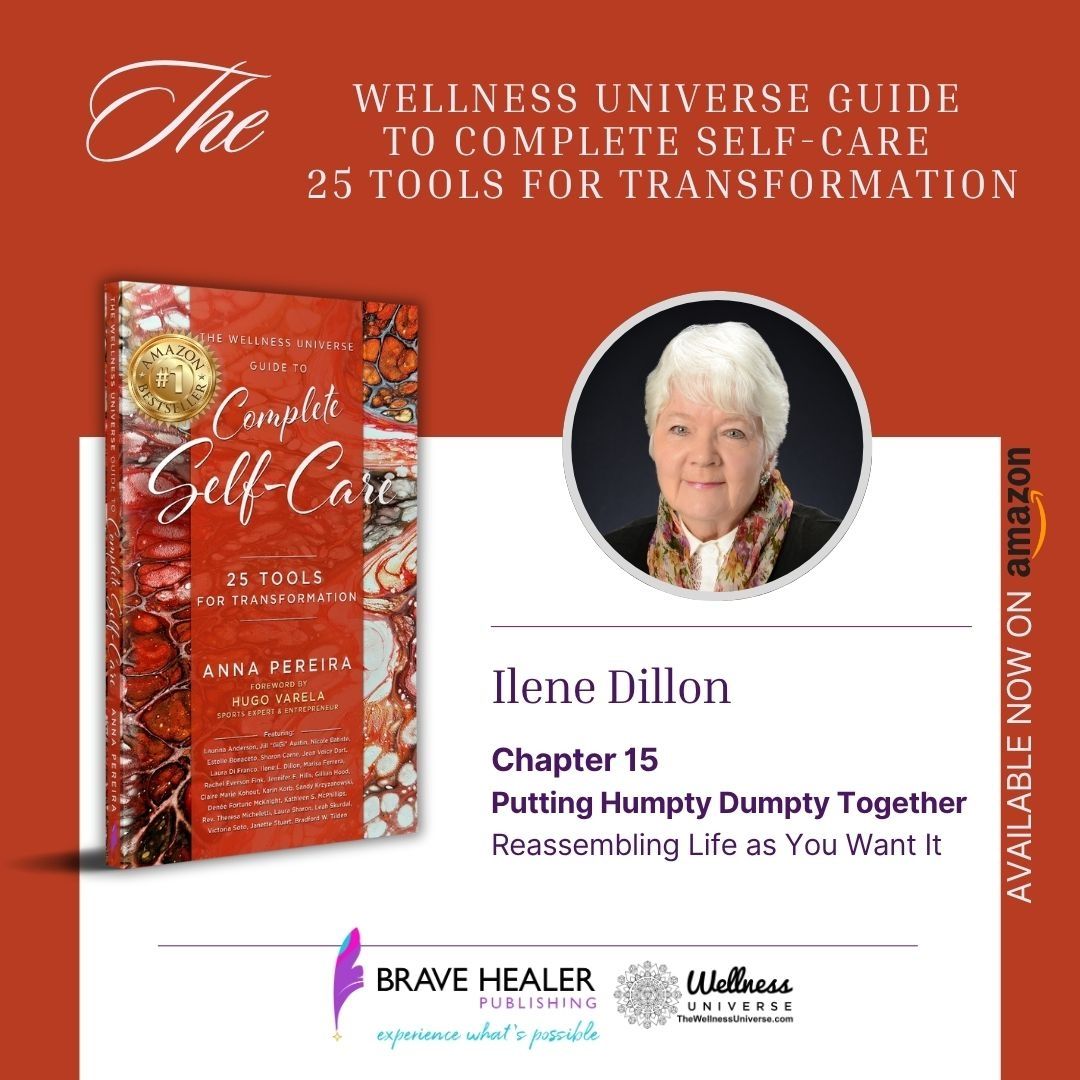
Ready for a gentle reset with real momentum? The Wellness Universe Guide to Complete Self-Care: 25 Tools for Transformation is a 5-star Amazon favorite, and readers say,
“This book should be your bedside table guidebook.”
Open to any page, choose a tool, and let one small shift become your next breakthrough.
A Magical Journey Workshop
with Ilene Dillon

Co-Create Your Best Life
Join Ilene and experience the following:
– Understanding Life’s Challenges in a way that makes sense and leads us to more fulfillment.
– Direct coaching and support for volunteers, helping you to have a direct and supported experience of this tool. For those watching but not participating directly, you will also have experience through watching and listening, giving you relief, understanding and a new way forward.
– Experiencing and feeling the power of one of the Four Main Pillars of Self-Esteem, which we will activate (and show you how
Watch the Recording Here
Get the bundle and save! Lifetime Access to the recordings!
Register Now and Watch the Recordings: https://bit.ly/AMJWorkshops
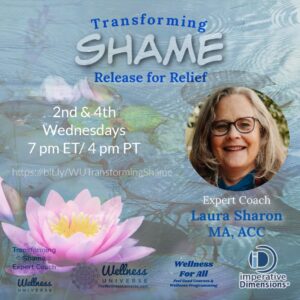
Transforming Shame: Release for Relief
Shame can quietly shape our thoughts, relationships, and self-worth. Left unaddressed, it can hold us back from living with confidence, connection, and peace. This 6-month, 12-session live online course helps you understand shame, release its grip, and cultivate self-compassion through practical tools, mindfulness practices, and guided reflection.
Session 10 – Break the Silence of Secrets
Discover how sharing safely and setting boundaries reduces shame’s hold.
👉 Enroll Now: https://bit.ly/WUTransformingShame

Ilene Dillon, MSW, developer of Emotional Realignment, is a Transformation Specialist who helps people understand and use emotions as they are designed to work for us, resolving personal challenges at their root and consciously designing life as they want it to be. With more than 50 years as a psychotherapist, marriage and family counselor, coach, and master teacher, Ilene brings decades of experience guiding individuals toward emotional clarity, healing, and transformation. She is a global speaker, podcast host and guest, and a multiple Amazon International and National #1 bestselling author, including Emotions in Motion: Mastering Life’s Built-in Navigation System, End Manipulation: Stop Being Jerked Around by Toxic, Energy-Draining People, and contributor to The Wellness Universe Guide to Complete Self-Care (Volumes 1, 2, 3, 5 and 6). Traveling full-time in her RV, Ilene writes, teaches, and speaks across North America, sharing practical tools that empower people to reclaim their power, navigate change, and create the life they truly want.
Ilene, great article. Your comparison of emotions to natural forms of energy was powerful, reminding us that emotions themselves are not inherently good or bad but rather signals that invite our attention and understanding. I also appreciated the shift from “outside-in” thinking to “inside-out” awareness, encouraging personal responsibility and self-reflection rather than blame.
Janette! Thank you so much for your feedback. As you know from our personal conversations, I am really excited to share awarenesses like these with the world. What I’ve been privileged to learn over the last half-century is, to me, Amazing! It makes life so much easier, more understandable and workable. Thanks to you and the Angels for such wonderful support of my efforts!