
Healing often begins with awareness. We observe patterns in our lives, recognize the beliefs we’ve inherited, and begin to understand how past experiences shape our thinking, feeling, and responses to stress. Awareness is a powerful first step. It brings unconscious patterns into the light.
Yet there comes a moment on every healing path when awareness alone is not enough.
At some point, healing asks us to move beyond insight and into embodiment. It invites us to live what we have learned, and to integrate our understanding into daily practices that support balance, resilience, and inner stability.
This is where grounding becomes essential.
In a world that often pulls us into constant stimulation, emotional overwhelm, and chronic stress, grounding practices reconnect us with something deeper and steadier. They remind us that healing doesn’t happen only in the mind. It happens through the body, through the nervous system, and through our relationship with the living Earth.
When we learn to reconnect with the ground beneath us, both literally and metaphorically, we discover a quiet but powerful source of resilience.
Why Grounding Practices Support Trauma Recovery
Trauma, stress, and prolonged emotional strain can disrupt the body’s perception of safety. When difficult experiences overwhelm our coping capacity, the nervous system adapts in order to protect us. These protective responses may show up as anxiety, hypervigilence, emotional numbness, or chronic tension in the body.
Over time, the brain can become conditioned to interpret everyday situations through a lens of threat. The stress response, designed to protect us in moments of danger, remains activated even when the threat has passed. So, this stress response gets thrown out of balance, which, in turn, disrupts the balance of the whole system.
Physical pain and emotional distress are processed through the same signaling pathways in the brain. When the body perceives pain or threat, it simply sends a signal, “It hurts.”
This is why chronic stress often manifests as both emotional and physical symptoms.
Healing requires helping restore the nervous system to a sense of safety. Grounding practices support this process by bringing awareness back into the body and into the present moment. When we slow down and reconnect with sensory experience – our breath, our posture, the feeling of the ground beneath our feet – the nervous system receives signals that it can begin to relax.
This shift allows the body to move out of a hypervigilent, unbalanced survival mode and into a state where healing, harmony, and restoration can occur.
The Nervous System and the Power of Earth Connection
Modern neuroscience increasingly confirms what many traditional cultures have long understood: connection with the natural world helps regulate the nervous system.
When we spend time in natural environments, our senses engage in ways that promote relaxation and balance. The sound of wind through trees, the rhythm of waves on the shore, and the warmth of sunlight on the skin all provide subtle cues that help the body settle.
These sensory experiences activate the parasympathetic nervous system – the branch responsible for rest, digestion, and recovery. The heart rate slows, breathing deepens, and the body begins to release accumulated stress.
This is one reason people often feel calmer after spending time outdoors. Nature offers a rhythm that is slower and more spacious than the pace of modern life. When we allow ourselves to align with that rhythm, our nervous system begins to regulate naturally.
Even small moments of connection with nature can make a difference. Standing barefoot on grass, tending a garden, or sitting quietly beneath a tree can help the body reconnect with the stabilizing presence of the Earth.
Grounding is not simply a symbolic act. It is a biological process that supports emotional and physical balance.
How Nature Helps Restore Emotional Balance
Of course, human beings are not separate from the natural world. We exist in a constant relationship with the environment that sustains us.
Every breath we take is part of an ancient exchange between humans and plants. We inhale oxygen released by trees and vegetation and exhale carbon dioxide that plants use for growth. This cycle reflects a deep interdependence between our bodies and the Earth’s ecosystems.
When we spend time in nature, we become more perceptive to experiencing the rhythms that have shaped human life for thousands of years.
Nature moves at its own pace. Seasons shift gradually. Trees grow slowly but steadily. Rivers carve their paths over centuries. These rhythms offer a powerful contrast to the constant urgency of modern life.
In nature, we are reminded that growth takes time and that restoration follows periods of challenge.
This perspective can be deeply healing for the nervous system. When we witness the steady resilience of the natural world, we begin to recognize that healing within ourselves can unfold in the same patient way.
The Role of Ancestral Healing in Resilience
Our healing journeys are not shaped only by our individual experiences. Many traditions recognize that emotional patterns and stress responses can also be influenced by our ancestral history.
Research in the field of intergenerational trauma suggests that the effects of traumatic events may influence biological and psychological responses across generations. For example, studies by Rachel Yehuda and her team at the Icahn School of Medicine at Mount Sinai in New York, examining descendants of Holocaust survivors, have found measurable differences in stress hormone regulation compared with other populations.
These findings do not mean we are necessarily destined to repeat the suffering of previous generations. Instead, they highlight the interconnected nature of human experience.
When we engage in healing practices, whether through therapy, mindfulness, or grounding work, we participate in a process that can shift patterns within our lineage. By regulating our own nervous systems and developing healthier ways of responding to stress, we create new possibilities for ourselves and for those who come after us.
Healing becomes both a personal journey and a collective act of restoration.
Simple Grounding Practices for Stress Relief
Grounding practices do not need to be complicated. In fact, the most effective techniques are often the simplest. What matters most is consistency and presence.
One powerful practice involves conscious breathing while standing or sitting on the earth. Take a few moments to feel the weight of your body supported by the ground. As you breathe slowly and deeply, imagine tension draining downward into the soil. This visualization helps the body release stored stress.
Another grounding practice is mindful walking. Instead of rushing from one place to another, slow your pace and bring attention to each step. Notice the sensation of your feet as they make contact with the ground. Feel the movement of your muscles and the rhythm of your breath. This practice helps bring awareness back into the body and reduces mental overactivity.
Touching the earth directly can also support nervous system regulation. Gardening, sitting against the trunk of a tree, or walking barefoot on grass allows the body to experience natural sensory input that is often absent in indoor environments.
Spending time near water is another effective way to ground the nervous system. The rhythmic movement and sound of water naturally invite a slower pace of attention. Whether near a river, lake, or ocean, these environments often encourage reflection and emotional release.
Even brief moments of connection with nature throughout the day can help restore balance.
Building Rooted Resilience in Daily Life
Resilience is often misunderstood as the ability to push through hardship without slowing down. In reality, true resilience is the ability to recover and adapt after stress.
A resilient tree survives strong winds not because it is rigid, but because its roots are deep and its branches can bend.
Human resilience works in much the same way. When we cultivate grounding practices, we strengthen our ability to return to balance after challenging experiences. We learn to pause rather than react, to breathe rather than brace, and to reconnect with stability when life feels uncertain.
Over time, these practices reshape the nervous system. What once felt overwhelming becomes more manageable. The body develops greater flexibility in responding to stress, allowing us to move through life with more ease and clarity.
Resilience grows not through force, but through steady connection to our bodies, to our breath, and to the Earth that sustains us.
Returning to the Ground Beneath Us
The healing journey rarely unfolds in a straight line. There will be moments of insight and moments of confusion, times when progress feels clear and times when old patterns resurface.
Yet beneath all of these experiences, the Earth remains steady.
The ground beneath our feet has supported life for millions of years. It continues to hold us, regardless of the challenges we face. When we remember to reconnect with this living foundation, we discover that stability is never entirely absent.
It is simply waiting for us to return to it.
Each time we pause to breathe deeply, step outside, or place our hands in the soil, we reaffirm our connection to the world that sustains us.
From that connection, resilience grows.
Like the roots of a tree, it extends quietly beneath the surface, anchoring us through seasons of change and supporting new growth in ways we may not always see.
Journaling Prompts for Grounding and Reflection
Where in my life do I currently feel ungrounded or overwhelmed, and what signals is my body giving me about this?
What natural places – parks, forests, water, gardens – help me feel calm and connected, and how might I spend more time in these environments?
What daily grounding practice could I commit to for the next week that would support my nervous system and emotional balance?
What strengths or resilience might I have inherited from my ancestors that I can draw upon in my healing journey?
If resilience had roots in my life, what would help those roots grow deeper?
Connect with Elizabeth on The Wellness Universe and follow her on Facebook and Instagram.

Healing. Here. Now. Mindfulness, Trauma, and Recovery is a course for self-care and healing brought to you in partnership with Elizabeth Kipp, Founder of Elizabeth Kipp Stress Management, LLC and Wellness Universe Trauma Expert Leader exclusively for Wellness for All programming.
Catch the replay – https://bit.ly/HealingHereNow
A Transformational Journey Workshops
Unlock the full transformational journey with all 29 powerful workshops!

Blessing for Your Transformation
with Elizabeth Kipp
Step into a powerful journey of healing and renewal with a live reading of Blessing for Your Evolutionary Transformation from the #1 best-selling book series The Wellness Universe Guide to Complete Self-Care: 25 Tools for Transformation. Release what no longer serves you, reconnect with your inner strength, and rediscover your purpose with clarity and peace. Join live for an inspiring experience of growth, conversation, and transformation—you don’t want to miss it!
#1 BEST SELLER AVAILABLE NOW!
The Wellness Universe Guide to Complete Self-Care, 25 Tools for Transformation
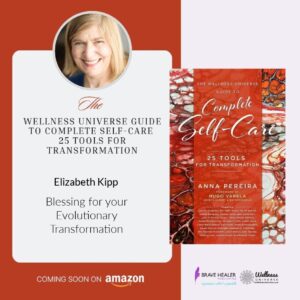
Ready for a gentle reset with real momentum? The Wellness Universe Guide to Complete Self-Care: 25 Tools for Transformation is a 5-star Amazon favorite, and readers say,
“This book should be your bedside table guidebook.”
Open to any page, choose a tool, and let one small shift become your next breakthrough.





Elizabeth is a Health Facilitator, Empowerment Coach, EFT/Tapping and Ancestral Clearing Practitioner, and Kundalini Yoga Teacher, helping people to step into the power of their own healing. She has turned her attention as a patient advocate and health facilitator in service to the alarmingly high population of people who suffer from stress, chronic pain, and the quest for a life free from suffering.

Thank you, Elizabeth, for your article which reminds us that healing is not just about awareness, but about embodiment and reconnecting with the steady wisdom of the Earth. The imagery of resilience growing like roots beneath the surface felt deeply comforting and hopeful.