And there I was, unintentionally sustaining my own suffering with my best trauma-informed strategies.
It happened slower than I could track. Restful sleep turned into tired mornings. Enthusiasm became forced. Passion turned to pressure. Until one day, the thought just landed: when did everything get so hard? When did this start? How long have I actually been pushing against the current?
That’s when I realized it. My mastery had become fuel for my misery.
More than 10 stress-management modalities and over a decade of growth-training certificates left me with a huge toolbox, but as they say, the sword cuts both ways. The tools had become weaponized.
And maybe you’re living your own version of this.
You’re so good at solving problems, you just manage them instead of digging into the root of why they keep popping up.
You’re so good at managing difficult employees that you don’t stop to think if they’re really right for the role.
You’re so good at juggling the workload, you never stop to ask whether half of it should be on your plate at all.
You’re so good at being the peacekeeper in your relationships, you don’t pause to realize that maybe hedging those hard conversations is holding all of you back.
Different story. Same override.
You did what any of us would do — kept your head up, kept going. You just missed your turn off. It was sitting in your blind spot, and the inertia and the good outlook kept you moving forward anyway. Momentum can trick you into assuming it’s the right direction because it just keeps the wheels turning while the road quietly carries you further from where you actually meant to go.
• • •
The Momentum Myth
Here’s the pattern I want to name, because once you see it, you can’t un-know it: you get so attached to the speed of your expansion that you stop checking whether the direction is still right. Motion starts to feel like proof. If the wheels are turning, you tell yourself the trip must be going somewhere good.
Physics doesn’t work that way, and neither do you. Expansion and contraction aren’t opposing forces fighting for control of your calendar. They’re one cycle. You only get to keep the expansion if you complete the contraction. Skip it, and your nervous system collects the debt later, usually with interest, usually at the worst possible moment. The same is true for direction. You only get to trust the momentum if you keep checking it against where you actually meant to end up.
So the second you feel your energy contract, panic sets in. If I slow down, I lose the thread. If I stop pushing, everything I built starts sliding backward. That belief is so load-bearing you’ve never actually tested it. You’ve just kept running the pattern: expand, expand, expand, collapse, apologize for the collapse, expand again, harder, without ever once checking if “again” is even the direction you meant to go.
Speed was never the same thing as progress.
• • •
The Sound of the Override
You know this voice. It’s the one that shows up the second your body asks for less:
“I can rest this weekend. I just need to get through this week first.” (You’ve said a version of this every week since March.)
“Everyone else seems to be handling it fine.” (You don’t actually know that. You know what they posted.)
“I’m not tired-tired. I’m just… over it.” (That’s exactly what tired sounds like when you’ve been overriding it for months.)
Different rooms, the client roster, the org chart, the group chat with your sister, same internal monologue on repeat.
• • •
The Mastery That Muzzled Me
Here’s what I mean by that. The very tools that were supposed to help me listen to my body were the ones drowning it out.
A few years ago now, I had a decade of nervous system training stacked on top of each other. I could regulate my way through client overload, three launches stacked one on top of the other, a calendar with zero white space, and still walk into every session steady and fully present. I was good at this. Genuinely good.
The momentum of growth had let my passion quietly morph into pressure, and I’d gotten so skilled at pushing through that I mistook the absence of collapse for the presence of wellness. The subtle nudge that used to make me pause on my own, long before I needed an emergency to stop me, had been trained out of me by the very tools meant to keep me regulated.
I actually tracked my “recovery” that season in a bullet journal. A little box to check off every day: rested. Which meant I’d lie in bed doing math on whether forty minutes of Netflix “counted,” feel a spike of failure when it didn’t hit some invisible quota, and then lie there genuinely stressed about not resting properly. I’d turned rejuvenation into a metric. Of course it wasn’t working. You can’t perform your way into an exhale.
The belief underneath all of it was never really about capital markets or coaching. It was inherited. The child of two serial entrepreneurs learns early that successful people are busy people, and busy people don’t stop. I didn’t choose that equation. I absorbed it before I was old enough to question it.
• • •
What the Busyness Was Hiding
Here’s what nobody wants to say out loud: you’re not actually afraid of falling behind. You’re afraid that if you stop long enough to feel what’s underneath the pace, you won’t like what you find.
Because the busyness has been doing the same job my tools were doing: standing between you and the question you’ve been outrunning. Is this actually the road I meant to be on, or the road I’m managing so I don’t have to check the map? Rest asks that question. Constant motion never does. That’s the real reason “later” keeps winning.
• • •
The Cost Missing from the P&L
Watch what this does at scale. Your team doesn’t just copy your hours; they copy your relationship to doubt. When you’re this confident, this in motion, dissent starts to feel like sabotage. So the quiet feeling someone on your team gets, that something about the next move doesn’t quite sit right, gets swallowed instead of said out loud. Nobody wants to be the one who slows down a ship that’s clearly going somewhere. So they file the feeling away, the way you filed away your own, and keep rowing.
That’s the real cost. Not burnout stats, not turnover. A team that’s gotten as good as you are at overriding its own knowing, because the direction has never once been questioned, only the speed.
It’s the same at home. The people closest to you sense it before they can name it, the feeling that something about this pace, this path, isn’t quite right, but who’s going to say that out loud when you seem this sure? So they go quiet too. Not because they don’t see it. Because saying it feels like betting against you.
Same override, both arenas. Confidence doesn’t just carry you past your own doubt. It carries everyone around you past theirs too.
• • •
The Exhale Isn’t Optional
Here’s the part that took me a decade to see: the tools were never the problem. I was using good tools to do the wrong job, using regulation, rest, and recovery to help myself push through, instead of actually stopping.
That’s the trap. Any tool can be weaponized, even the ones built to help you pause. You can turn breathwork into one more task to check off. You can turn a rest day into a strategy for getting back to work faster. The tool doesn’t change. What changes is what you’re using it for: pausing, or postponing the pause.
That’s Energetic Alignment: reading the contraction as information instead of failure, so you can tell the difference.
The pause isn’t lost momentum. It’s the part of the cycle where the next expansion gets a foothold.
• • •
Before Your Next To-Do List
Try this instead. Ask yourself one question, honestly: Where in my week am I calling recovery “rest” when it’s actually just a longer runway before the same crash?
A nap is recovery. A weekend of catching up on emails you’re calling “downtime” is recovery too. True rest recalibrates how you operate going forward; it changes the pace, not just pauses it.
If you can’t tell the difference in your own week right now, that’s not a personal failing. That’s the pattern talking. Naming it is the first move.
You can’t perform your way into an exhale.
• • •
You don’t need permission to stop performing productivity long enough to actually check whether the road you’re on still leads where you meant to go. You need to trust that the contraction has purpose, even when it looks, from the outside, like it’s messing up your plans.
Your body already knows the difference between rest and a longer runway. What you do with that data is the only part that’s actually up to you.
Just because you can keep the wheels turning doesn’t mean you’re still on the right road.
That’s the pattern worth decoding before you build another quarter on top of it. Book a Clarity Call, and in thirty minutes, we’ll map out your specific pattern, your next clear step, no strings: ChatWithAnik.com.
Connect with Anik on The Wellness Universe and follow her on Facebook and YouTube.
COMING SOON!
The Wellness Universe Guide to Complete Self-Care:
25 Tools for Navigating Loss, Grief and Transition
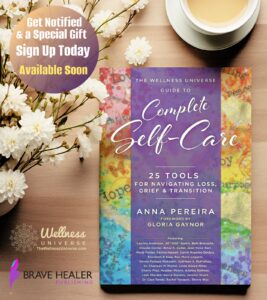
The Wellness Universe Guide to Complete Self-Care, #1 Bestselling book series brings more well-being support to you soon. 25 Tools for Navigating Loss, Grief & Transition available soon. Sign up now for free gifts and win a prize in our Mega Wellness Prize Bonanza – Over $20,000 in prizes & everyone will win:
👉 Join Our Launch Team & Win Prizes
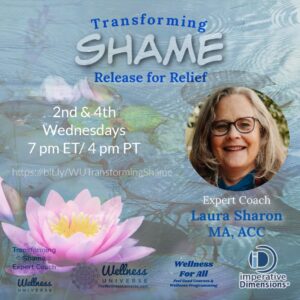
Transforming Shame: Release for Relief
Shame can quietly shape our thoughts, relationships, and self-worth. Left unaddressed, it can hold us back from living with confidence, connection, and peace. This 6-month, 12-session live online course helps you understand shame, release its grip, and cultivate self-compassion through practical tools, mindfulness practices, and guided reflection.
👉 Enroll Now: https://bit.ly/WUTransformingShame