

What does it really mean to “regulate your nervous system”—and why does it matter, especially for those of us guiding others?
If you’re a parent, grandparent, healer, teacher, or leader in your community, chances are good that someone is looking to you as a calm in the storm. But what happens when your own system is spinning?
Let’s talk about it.
What Is the Nervous System, Really?
The nervous system is your body’s communication highway. It processes signals from the outside world and determines how you’ll respond.
- The central nervous system (CNS) includes the brain and spinal cord. It interprets signals and initiates responses.
- The peripheral nervous system (PNS) connects your brain and spinal cord to the rest of your body—so your hands, gut, and feet respond to what your brain notices.
- The autonomic nervous system (ANS) is your autopilot. It controls heart rate, digestion, and breathing—without you having to think about it.
The ANS has two key modes. - The sympathetic nervous system is the “fight, flight, or freeze” response—designed to save your life from perceived threats.
- The parasympathetic system is the “rest and digest” mode that brings you back to calm and repair. Both are necessary. But when your body gets stuck in high alert, that’s when imbalance—and suffering—can set in.
Signs of a Dysregulated Nervous System
Everyone has moments of dysregulation. But when it becomes chronic, it affects how you show up in the world.
You might notice:–
- Feeling easily overwhelmed or reactive
- Racing thoughts and constant worry
- Shallow breathing or tight chest
- Muscle tension, especially in jaw or shoulders
- Difficulty sleeping or staying asleep
- Digestive issues or loss of appetite
- Trouble focusing, forgetfulness, or zoning out
What It Feels Like When Your Nervous System Is Regulated
A regulated nervous system doesn’t mean you’re always calm or Zen. It means you have the capacity to respond rather than react. You can recover your calm more easily after being activated.
When your nervous system is in balance, you feel emotionally stable and resilient. Your breathing is deep and steady. Your muscles are relaxed. You can focus and make decisions with clarity. You manage emotions without spiraling into drama. You feel connected to your body. You remember who you are at your core. And you’re flexible and adaptive in the face of change.
That’s what I call being agile rather than fragile.
Listening to Your Body’s Wisdom
It starts with noticing.
Does caffeine make your nerves jangly? Do loud sounds or strong smells overwhelm you? Do bright lights make you irritable? Do you constantly feel “on edge” or overstimulated?
Your body is sending signals all the time. The question is—are you listening?
A few weeks ago, I was sitting outside when a private jet took off low over my house. The sound jarred me. I felt the jangle in my system. As the noise faded, I brought my attention to the birdsong that returned. The birds bounced back quickly—and so did I, once I tuned into that natural rhythm again.
You and I can learn to bounce back, too.
Regulating Your Nervous System: A Personal Practice
There’s no one-size-fits-all solution. The journey to a more regulated nervous system is personal—and it starts with awareness and self-responsibility.
For some people, chronic stress is the main culprit. For others, it’s unresolved trauma that needs deeper healing. In many cases, it’s both. That’s why surface-level self-care tips aren’t always enough. You may need a more layered, body-based approach that includes emotional processing, somatic work, and trauma-informed support.
Maintaining a regulated nervous system may also require constant attention until it becomes a default setting. I’m not referring to a fear-based hypervigilance. But we can choose where to focus our awareness. We can choose to live in a state of constant returning awareness again and again to our inner being.
What’s most important is that you find practices that work for you. My morning spiritual practice has become non-negotiable. When I start the day with a spiritual anchor, it sets the tone for resilience during the day. I encourage you to set aside 5-10 minutes in the morning or evening as a spiritual practice to check in with your inner being – the wise part of yourself.
Here are some of my favorite spiritual practice tools to explore:
-
- Breath awareness – notice the expansion of your rib cage. Bring your awareness from head to heart and imagine you can breathe through your heart as if you have a nose in the center of your chest.
- Journaling – move the spinning thoughts from head to paper. Start with a prompt such as:
- If the wise part of myself talked to me, it would say…
- The hard stuff I have overcome includes …
- The successes I’m most proud of are…
- Body Soul Movement – Drop your awareness into your body. Notice the space behind your navel. Breathe into the center of your pelvis as if you’re pouring water into a pitcher. Notice how your body responds. Allow your body to move as it wants and allow your mind to observe the movement.
- Nature connection – Go outside. Listen to the birds. Notice the colors. I admit to being a tree hugger. When I need to feel grounded, I wrap my arms around a tree and press my heart gently into the tree trunk. Try it. You might be surprised at how stabilizing that simple connection can feel.
- Sound therapy – Sound waves can help restore balance and harmony to our body, emotions, mind and spirit. Listen to 528 hz healing frequencies or Crystal Singing Bowl healing sounds.
- Prayer and Meditation – Often our thinking mind focuses behind the eyes at the front of the head. Lightly bring your awareness to the back of your head to help calm your thoughts. Practice sitting or walking while watching your thoughts float by like a leaf on a stream. Listen deeply to the still, quiet voice within guiding you to your highest and best self.
Try out different tools and tune in to what actually helps your body come back to center.
The Jazz Living Approach
I talk a lot about “Jazz Living”—because life isn’t a rigid script. It’s an improvisation.
Jazz Living means you create structure around your core values—what matters most. You learn to move with the rhythms of life instead of resisting them. You respond with agility instead of collapsing in the face of stress.
To me, nervous system regulation is at the heart of that dance. When you’re regulated, you can stay steady even when the tempo picks up and you need to improvise. You can adjust your rhythm without losing your center.
Your Next Step
Whether you want to explore this work on your own or with support, I’ve got you covered.
• Want a practical experience of nervous system regulation? Watch my Grounded Presence class replay and reconnect to your inner calm.
👉 Watch the Grounded Presence replay: https://bit.ly/GroundedPresenceIntro
Use Access Code Grounded30 to save 30%
• Feeling called to go deeper in this work? Let’s connect to explore how I can support you, your team, or your community.
👉 Let’s Chat: https://calendly.com/leah-skurdal/let-s-chat
In these times of rapid change, maintaining a balanced nervous system isn’t just self-care—it’s leadership. When you show up grounded, present, and emotionally agile, you give others permission to do the same.
Let your nervous system be a compass, not a casualty. The more you tune in, the more attuned you become to the people you serve.
You don’t need to be perfect. You just need to be willing to pause, listen, and realign.
That’s how we stay agile rather than fragile.
Connect with Leah on The Wellness Universe and follow her on LinkedIn and Facebook.
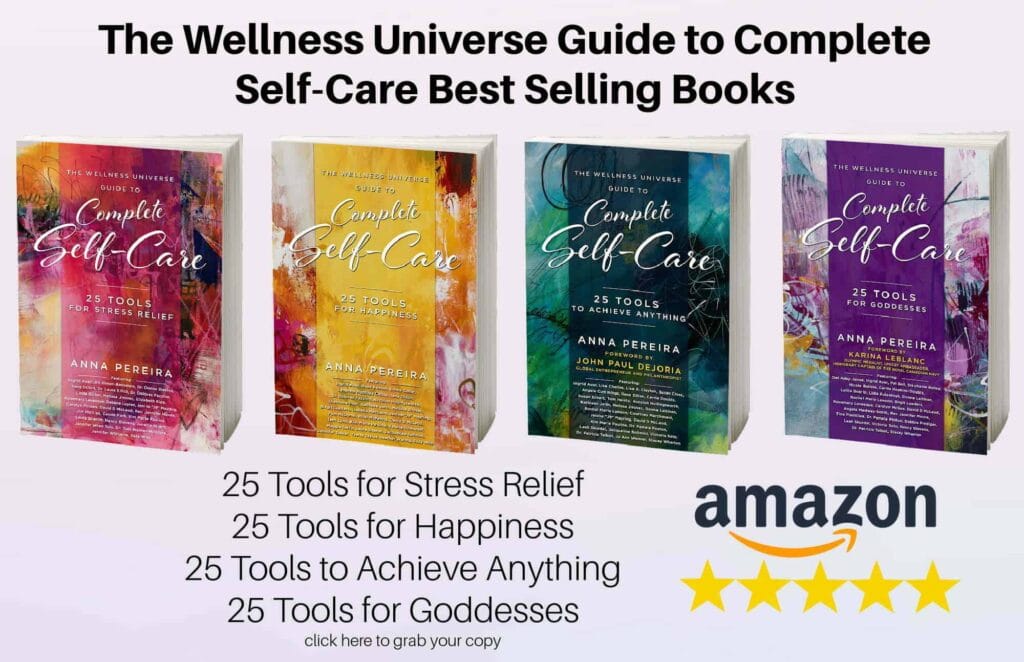
AVAILABLE SOON!
The Wellness Universe Guide to Complete Self-Care,
25 Tools for Transformation

Life is a journey of transformation—some chosen, others unexpected. In this book from The Wellness Universe, more than 25 experts share stories and self-care tools to guide your growth and transformation. Discover wisdom, healing, and inspiration to live a fulfilled, balanced life. Aligned with The Wellness Universe’s mission, it’s a guide to well-being and a better world.
Get Notified and Receive Exclusive Gifts
Mid-Week Reset Meditation
Pause with us to realign with your higher consciousness. The collective consciousness of our group will amplify your experience and facilitate reconnecting to your natural inner wellbeing to navigate life’s challenges with grace, flow, and ease.
Catch the replay – https://bit.ly/WUMidWeekMeditation
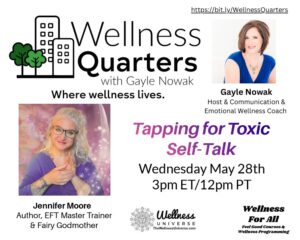
Wellness Quarters with Gayle Nowak
Guest: Jennifer Moore
Topic: Tapping for Toxic Self-Talk
Jennifer Moore shares a simple way to use Emotional Freedom Technique (EFT), also known as tapping, to soothe the nervous system and reconnect with the physical body.
Register & Join Live: https://bit.ly/WellnessQuarters

Mental Health Awareness 2025 — Wellbeing For All
This Mental Health Awareness Month, The Wellness Universe invites you to reimagine mental health as a journey of wholeness, not just diagnosis.
Join us for a full day of expert-led sessions designed to nurture emotional balance, spiritual connection, and holistic healing.
Walk away empowered with tools to calm your mind, regulate stress, and restore your whole self.
Watch now – recorded sessions on demand: https://bit.ly/WellbeingForAll2025


Leah Skurdal guides people to up-level their stress resilience to improve relationships. Leah shares intuitive insights in private Energy Healing to address the roots of disharmony. As an inspirational speaker and published author, Leah offers lively classes, experiential workshops, and keynotes.

Thank you, Leah. What a powerful and timely reminder that nervous system regulation is foundational, not just for our own well-being, but for how we show up for others. I especially love your “Jazz Living” metaphor for staying steady and flexible in life’s improvisations. Thank you for this deeply grounding and wise message!