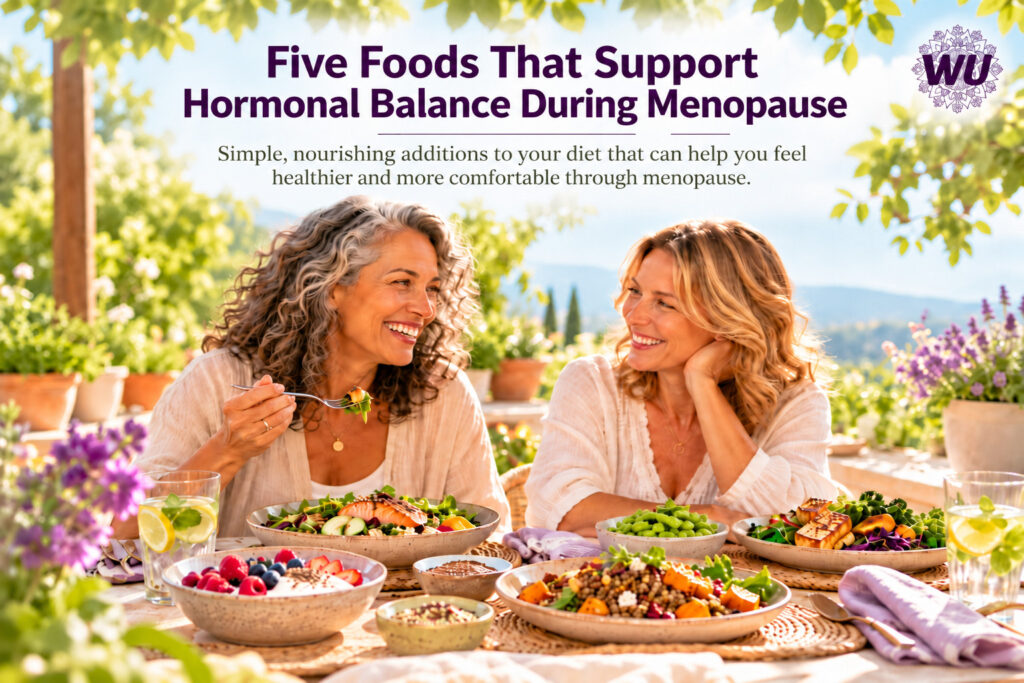
Menopause has a way of changing things you once took for granted. Perhaps you’re waking up in the middle of the night feeling unusually warm, noticing that your energy isn’t quite what it used to be, or wondering why your body seems to respond differently to foods you’ve enjoyed for years.
Much of this comes down to hormonal changes. As estrogen and progesterone levels fluctuate during perimenopause and estrogen levels eventually decline, the body goes through several adjustments. These changes can influence sleep, metabolism, bone density, cardiovascular health, and even how your body stores fat.
Naturally, you might wonder whether changing your diet could make things easier.
While food cannot reverse menopause or restore estrogen to its previous levels, good nutrition can support your body through these changes. Some foods contain plant compounds that interact with estrogen receptors, while others provide nutrients that become particularly important during this stage of life.
Here are five foods worth adding to your regular meals, along with a few easy ways to enjoy them.
1. Soybeans and Tofu: A Little Plant-Based Estrogen Support

Soy has received considerable attention in menopause research, largely because it contains compounds called isoflavones. These naturally occurring phytoestrogens have a chemical structure resembling estrogen and can interact with estrogen receptors in the body.
Some studies suggest that soy isoflavones may help reduce the frequency or severity of hot flashes, although results vary, and the benefits are generally modest. Soy foods also offer high-quality plant protein, which helps maintain muscle mass as we age.
The nice thing about soy is how easily it fits into everyday meals. A handful of steamed edamame makes a satisfying afternoon snack, tofu absorbs the flavors of your favorite stir-fry, and unsweetened soy milk works well in smoothies or morning cereal.
If soy hasn’t been part of your diet before, start with a food you enjoy rather than forcing yourself into unfamiliar recipes.
2. Ground Flaxseed: Small Seeds With Valuable Nutrients

Flaxseed may look unremarkable, but it offers an impressive combination of dietary fiber, plant-based omega-3 fatty acids, and lignans.
Lignans are plant compounds with phytoestrogenic properties. Although flaxseed is frequently recommended for menopause symptoms, research has not consistently shown that it reduces hot flashes.
Its nutritional benefits, however, are well worth considering. The soluble fiber in flaxseed can help manage cholesterol levels and support digestive health. This matters during menopause, when cardiovascular risk and changes in bowel habits can become more noticeable.
Try adding one tablespoon of ground flaxseed to your breakfast oatmeal, mixing it into yogurt, or blending it into a smoothie. Ground flaxseed is preferable to whole seeds because it’s easier to digest and allows your body to access more of its nutrients.
Remember to drink enough water as you increase your fiber intake.
3. Salmon and Sardines: Nourishment for Your Heart and Bones

If you’re looking for foods that support healthy aging, oily fish deserves a place on your shopping list.
Salmon and sardines are rich in omega-3 fatty acids, particularly EPA and DHA, which support cardiovascular health. This becomes increasingly relevant after menopause, when the decline in estrogen is accompanied by changes in cholesterol and other cardiovascular risk factors.
Salmon also provides vitamin D, while canned sardines with edible bones offer calcium. Both nutrients are important for maintaining bone health, especially because bone loss accelerates around menopause.
Aim to include oily fish in your meals about twice a week, following local guidance on low-mercury seafood choices.
You could bake salmon with lemon and herbs, add sardines to whole-grain toast, or prepare a simple fish salad with leafy greens and olive oil. Good nutrition doesn’t require elaborate recipes; familiar meals prepared with nourishing ingredients work beautifully.
4. Plain Yogurt: A Daily Investment in Bone Health

Bone health may not be the first thing that comes to mind when thinking about menopause, particularly if hot flashes and poor sleep are demanding your attention. Yet declining estrogen can significantly accelerate bone loss and increase the risk of osteoporosis.
Plain yogurt is an accessible source of calcium and protein, two nutrients that support healthy bones. Some varieties are also fortified with vitamin D, which helps the body absorb calcium.
Greek yogurt offers an additional advantage through its higher protein content, useful for maintaining muscle strength as you get older.
For breakfast, try plain yogurt topped with berries, chopped walnuts, or ground flaxseed. It also makes an excellent base for savory dips and dressings.
Check nutrition labels when shopping, since calcium and vitamin D levels vary between products. If you avoid dairy, fortified plant-based yogurts can be an alternative.
5. Lentils: Everyday Support for Metabolism and Energy

Lentils are among the simplest foods you can add to your diet, and they’re remarkably nutritious.
They contain plant protein, complex carbohydrates, dietary fiber, iron, and folate. Their combination of fiber and protein helps you feel satisfied after meals and supports healthier blood-sugar responses.
This can be particularly helpful during menopause, when changes in body composition and insulin sensitivity may make weight management more challenging.
Lentils also provide iron, which remains important during perimenopause, especially for women experiencing heavy or irregular menstrual bleeding.
A warm lentil soup, a vegetable-rich lentil curry, or a salad with cooked lentils, cucumber, tomatoes, and lemon can make a nourishing meal without much preparation.
Making Food Work for You During Menopause
You don’t need to overhaul your entire diet to begin eating more thoughtfully during menopause. Consider adding a few of these foods to meals you already enjoy, paying attention to how satisfied and energized you feel afterward.
A varied diet, regular physical activity, adequate sleep, and attention to bone and heart health can help you navigate this transition with greater comfort and confidence.
And if symptoms are interfering with your daily life, don’t hesitate to discuss them with a healthcare professional. Menopause treatments, including hormone therapy when appropriate, can offer relief that dietary changes alone may not provide.
Most importantly, give yourself room to adjust. Your nutritional needs are evolving, and a little more attention to what nourishes you can make this stage of life feel more manageable.
References
- National Institute on Aging. “What Is Menopause?” National Institutes of Health. https://www.nia.nih.gov/health/publication/menopause-time-change/introduction-menopause
- National Center for Complementary and Integrative Health. “Soy: Usefulness and Safety.” National Institutes of Health. https://www.nccih.nih.gov/health/soy
- National Center for Complementary and Integrative Health. “Menopausal Symptoms and Complementary Health Approaches: What the Science Says.” February 2021. https://www.nccih.nih.gov/health/providers/digest/menopausal-symptoms-and-complementary-health-approaches-science
- Mayo Clinic Staff. “Flaxseed: Is Ground Better Than Whole?” Mayo Clinic, January 31, 2023. https://www.mayoclinic.org/healthy-lifestyle/nutrition-and-healthy-eating/expert-answers/flaxseed/faq-20058354
- American Heart Association. “Fish and Omega-3 Fatty Acids.” August 23, 2024. https://www.heart.org/en/healthy-living/healthy-eating/eat-smart/fats/fish-and-omega-3-fatty-acids
- National Institute of Arthritis and Musculoskeletal and Skin Diseases. “Calcium and Vitamin D: Important for Bone Health.” National Institutes of Health, May 2023. https://www.niams.nih.gov/health-topics/calcium-and-vitamin-d-important-bone-health
- Harvard T.H. Chan School of Public Health. “Lentils.” The Nutrition Source. https://nutritionsource.hsph.harvard.edu/food-features/lentils/
- MedlinePlus. “Calcium, Vitamin D, and Your Bones.” U.S. National Library of Medicine. https://medlineplus.gov/ency/patientinstructions/000490.htm
#1 Amazon Bestseller Available Now
The Wellness Universe Guide to Complete Self-Care:
25 Tools for Navigating Loss, Grief and Transition
Loss changes us—but we don’t have to navigate it alone.
The Wellness Universe Guide to Complete Self-Care: 25 Tools for Navigating Loss, Grief & Transition brings together compassionate guidance, personal stories, and practical tools from wellness professionals who understand the many ways grief can enter our lives—from death and heartbreak to identity shifts, caregiving, major life changes, and the quiet losses we don’t always know how to name.
With a foreword by Gloria Gaynor, this deeply human collection offers support for meeting change with greater tenderness, resilience, and hope.
Wherever you are in your journey, there is something here to help you take the next step.
📖 Available now on Amazon.
Get Your Copy Today for only $1.99!


The Wellness Universe is your resource for health, wellness, well-being, and transformation. We serve and support professionals who make the world a better place and individuals and groups who seek their best life.
A woman owned company; having the vision in 2013, Anna Pereira launched the first directory in 2015 bringing together a community of members making the world a better place to be found by those seeking their best life. The Wellness Universe has grown since then to be a one-stop shop for total wellness support! We are a vetted community, online directory, book publisher, resource center, event producer, content platform, and so much more, supporting whole-health and well-being on a global scale.
The Wellness Universe is a home that connects industry professionals in the health, wellness, and well-being fields to seekers of total well-being. WU provides our WU World-Changer members with peer support, Wellness Universe produced events (live and online), projects, visibility, business mentoring, and community. Through The Wellness Universe our WU World-Changer members serve WU Friends, seekers of health, wellness and transformation, with coaching, workshops, content and more.
The Wellness Universe provides individuals and groups seeking their best lives with access to our members, wellness content, educational resources, and guidance in all areas of wellness to transform visions of how they want to live life into the life they experience.
Through the directory, WU Featured Blog, SoulTreat wellness retreat, Self-Care Books, group well-being programs, and online learning center, The Lounge, The Wellness Universe provides many avenues to support whole health, mind, body, spirit and planet.
Join us today! Wellness Professional or Seeker of Your Best Life