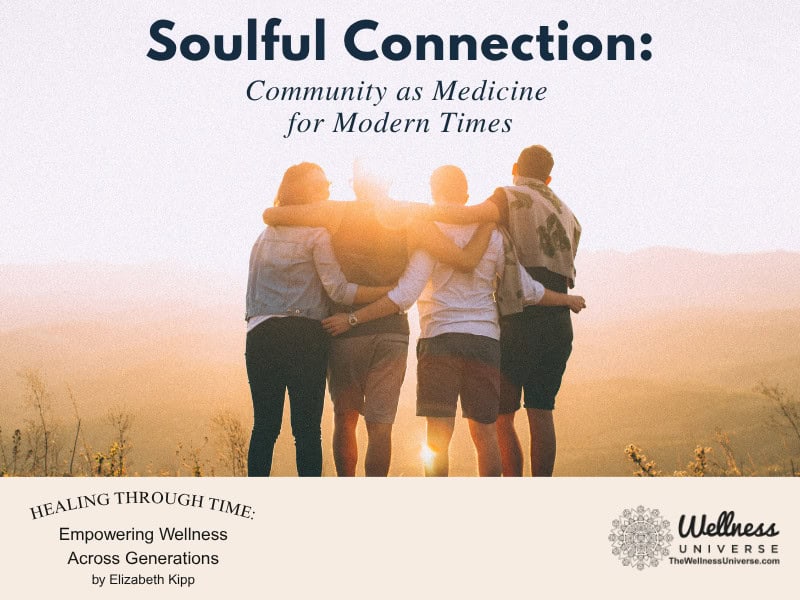
Human beings were never meant to heal entirely alone.
We may need solitude. We may need quiet places where we can listen to ourselves without distraction. There are seasons when withdrawing from the noise of the world gives us room to hear what the body, heart, and spirit have been trying to say.
But solitude and isolation are not the same thing.
Solitude can restore us. Isolation can slowly convince us that we have to carry everything ourselves. And scientific studies have found that social isolation and loneliness are as damaging to your physical health as smoking up to 15 cigarettes a day and significantly increase your risk of early death.
Modern life has made isolation surprisingly easy. We can work from home, order groceries without speaking to anyone, communicate through screens, and spend an entire day immersed in information with very little meaningful human contact. We may have hundreds of online connections yet still wonder who we could call if we were frightened, grieving, overwhelmed, or simply needed someone to sit beside us.
And the body notices.
Throughout this year’s exploration of Embodied Awakening: Living the Legacy of Healing, we have been examining healing as something we live through the body. We have explored presence, breath, grounding, boundaries, emotional flow, ancestral patterns, and the reclamation of joy. Each of these practices helps us come home to ourselves.
Now another part of that homecoming asks for our attention: coming home to one another.
We Are Relational Beings
Our nervous systems develop in relationship. From the beginning of life, we learn about safety through contact with other people. A familiar voice, attentive eyes, a comforting touch, or the steady presence of someone who responds to us can communicate something fundamental to the developing system: I am here. I matter. Someone is with me.
When those experiences are inconsistent, frightening, or absent, the nervous system adapts to find safety as best it can. We may become watchful around others. We may learn to anticipate rejection, hide our needs, please others, remain emotionally distant, or depend entirely on ourselves.
These responses make sense. They are protective.
But protection can become isolation when it continues long after the circumstances that created it have changed.
I have seen this repeatedly in healing work – both in my own and in my clients’ work. People may deeply desire connection while feeling unsafe when it becomes available. They want to be known, yet vulnerability feels dangerous. They want support, but asking for help feels uncomfortable. They want community, yet part of them remains near the doorway, ready to leave.
The question then becomes more compassionate than, “Why can’t I connect?”
We can ask, “What has my nervous system learned about connection?”
That question changes the conversation. It replaces criticism with curiosity.
Coregulation: The Nervous System Heals in Relationship
Although we can practice meditation, breathwork, and mindfulness to self-regulate, nervous system regulation happens between people. You may have experienced this without having a name for it. You are upset, and someone you trust sits quietly beside you. They do not rush to give advice. They do not tell you what you should feel. They remain present.
Gradually, you feel a shift. Your breathing may slow and deepen. Your shoulders may soften. The urgency of the moment may ease. And you might begin to feel that you are not facing the experience alone.
This is one expression of co-regulation, the way our physiological and emotional states can be influenced through safe connection with another person.
Healing happens in relationship because relationship gives the nervous system experiences that thought alone cannot provide. We can tell ourselves repeatedly that it is safe to trust, but being treated with consistency teaches trust differently. We can intellectually understand that our needs matter, but having someone respond compassionately when we express a need gives the body a new experience.
The nervous system loves repetition. When safe connection happens repeatedly, we begin to create a different pattern.
When Belonging Has Not Felt Safe
Community is not automatically healing.
For some people, family was the first place they learned that belonging required sacrifice. You might have learned that acceptance depended upon being quiet, useful, agreeable, successful, strong, or emotionally undemanding. Maybe speaking honestly in your family brought criticism. You might have experienced that being different threatened connection.
Religious communities, schools, neighborhoods, workplaces, social groups, and even healing communities can reproduce these same patterns. This matters because simply telling someone to “find your people” ignores what their body may have learned about groups.
Belonging may carry memories of exclusion, judgment, betrayal, abandonment, or pressure to conform. The body can remember those experiences when we enter a new room, even when the people in that room have done nothing threatening.
And ancestral history can deepen these patterns.
Many of our ancestors survived because belonging to a group was essential. Family, tribe, village, faith community, or cultural identity offered protection and resources. Exclusion could carry serious consequences. Migration, persecution, war, forced displacement, addiction, poverty, family estrangement, and social oppression disrupted communities and changed the ways people learned to trust one another.
Some families survived by becoming tightly connected. Others survived by becoming private, guarded, or fiercely self-reliant. We may inherit family messages such as, “Don’t trust outsiders,” “Keep family matters private,” or “We take care of our own.”
These messages may once have protected someone. We can honor that history while asking whether the same protection is needed now.
From Hyper-Independence to Interdependence
Modern culture often celebrates independence. We admire people who can handle everything on their own. Yet independence and hyper-independence differ in important ways. Healthy independence gives us agency. Hyper-independence can make receiving feel dangerous.
People who have been disappointed repeatedly may decide, consciously or unconsciously, that needing no one is safer than needing someone who might not be there. The strategy can look powerful from the outside. Inside, it can be exhausting.
Interdependence offers another possibility. It means I can stand in my truth and remain connected to you. I can ask for help without surrendering my agency. I can support you without taking responsibility for your life. I can belong without disappearing into the group.
This is where the boundaries we explored earlier in this series become essential. Healthy community does not require self-erasure. In fact, genuine belonging becomes possible when we can bring more of ourselves into relationship rather than performing the version we believe will be accepted.
We do not need to choose between autonomy and connection. We can belong to ourselves and belong with others.
Collective Mindfulness: Practicing Presence Together
Mindfulness is often pictured as a solitary practice, one person sitting quietly with eyes closed. Mindfulness can also be collective.
Imagine a group of people growing quiet together. They can begin by noticing their breathing. No one has to perform or produce an answer. For a few moments, everyone simply arrives.
Something shifts when presence is shared.
We listen differently when we are not preparing our response. We become more aware of tone, expression, silence, and what is happening inside our own bodies as another person speaks. We begin to notice the impulse to interrupt, advise, rescue, withdraw, or judge.
And then we have a choice.
Can I stay present?
Can I listen without needing to fix?
Can I allow another person’s experience to be theirs?
This is relational mindfulness. Presence becomes something we practice with one another rather than something we cultivate only in private. And being witnessed without being corrected is profoundly healing.
The Ancient Power of Shared Ritual
Long before we had therapy offices, wellness apps, or online support groups, human beings gathered. We gathered around fires. We prepared food together. We sang, prayed, mourned, danced, told stories, marked births and deaths, celebrated harvests, honored ancestors, and created ceremonies around life’s transitions.
Ritual gave communities a way to say: This matters. We are here. We are experiencing this together.
Shared ritual can still serve that purpose.
A ritual need not be elaborate. Lighting a candle before a group meditation is a ritual. Sharing a meal with intention can be a ritual. Gathering regularly with people who tell the truth about their lives can become a ritual. Singing, walking, praying, creating, or sitting together in silence can carry sacred meaning.
The power does not necessarily come from the activity itself. It comes from attention, intention, repetition, and relationship. Ritual creates a container where we can remember that our individual lives belong to something larger.
Healing Isolation Through Small Acts of Connection
If you have been isolated for a long time, the answer is not to force yourself into a crowded room and demand that your nervous system enjoy it.
Healing respects capacity.
Begin smaller.
You might message someone you trust and ask how they are doing. Share a cup of tea with a neighbor. Join a class, recovery meeting, spiritual gathering, volunteer group, walking group, or creative circle where connection grows around a shared purpose.
Notice what happens in your body as you connect.
Do you soften? Brace? Become energized? Feel the urge to leave? Do you begin performing, caretaking, or disappearing?
There is nothing wrong with what you notice. Your response is information. Focus on curiosity rather than criticism. Connection becomes healing when we can remain aware of ourselves while being with another person.
A Practice of Collective Presence
Try this with one trusted person or with a group.
Begin by sitting comfortably and noticing the support beneath your body. Allow your breathing to find its own rhythm. If it feels comfortable, let your exhale lengthen gently.
Then look around the room. Notice the people sharing the space with you. You do not need to speak yet. Simply recognize that other human beings are here.
Each person can silently ask:
“What do I notice in myself as I sit here with others?”
Then allow a few minutes for anyone who wishes to share what they notice. For everyone else, the practice is listening – no advice, fixing, comparison, or any attempt to change the speaker’s experience.
Listen.
When the person finishes, pause with a long, deep breath before someone else speaks.
At the end, take a moment to notice your body again. Has anything shifted? Perhaps nothing has. That is fine, too.
The purpose is not to manufacture intimacy. It is to practice presence in relationship.
Becoming the Community We Needed
Ancestral healing often invites us to consider what we inherited from those who came before us. We examine burdens, survival patterns, beliefs, and unfinished grief. But lineage also carries the memory of gathering. Our ancestors survived because people shared resources, knowledge, stories, labor, food, protection, celebration, and care. Human survival has always been relational.
Part of healing the lineage is remembering this inheritance, too.
We can become people who know how to stay present when someone is hurting. We can create families where emotions are welcome. We can build communities where asking for help does not diminish dignity. We can learn to disagree without withdrawing love. We can celebrate one another without competing and create spaces where people do not have to hide their humanity to belong.
This is how healing becomes collective.
The changes may appear small. One person listens instead of interrupting. Someone asks for support instead of silently struggling. A family begins gathering around a table again. A group pauses together before speaking. Someone who has spent years hiding finally discovers a place where they can exhale.
These moments matter.
Living the Legacy of Connection
The healing journey asks us to come home to the body, but home was never meant to be a locked room. As we become safer within ourselves, we gain greater capacity to meet one another. And as we experience trustworthy connection with others, the body receives new evidence that belonging does not always require vigilance or self-abandonment.
Community cannot remove every wound. Another person cannot heal us for us. But safe relationships can create conditions in which healing becomes more possible.
This is one of the invitations of our time: in a culture filled with speed, distraction, division, and digital contact, we can practice the radical act of being genuinely present with one another.
We can remember that listening is sacred. Gathering is sacred. Asking for help is human. Receiving is human. Offering our presence to another person is one of the oldest forms of care we possess.
When we gather with awareness, something larger than individual healing becomes possible. We begin to restore our capacity for trust. We remember how to belong without losing ourselves. We create experiences of connection that can ripple through families and communities and into the generations that follow.
We become living evidence that isolation does not have to be our inheritance.
Healing happens in relationship.
And perhaps one of the medicines our modern world needs most is something ancient that has been with us all along: the experience of sitting together, breathing together, listening to one another, and remembering that none of us was ever meant to make this journey alone.
Connect with Elizabeth on The Wellness Universe and follow her on Facebook and Instagram.
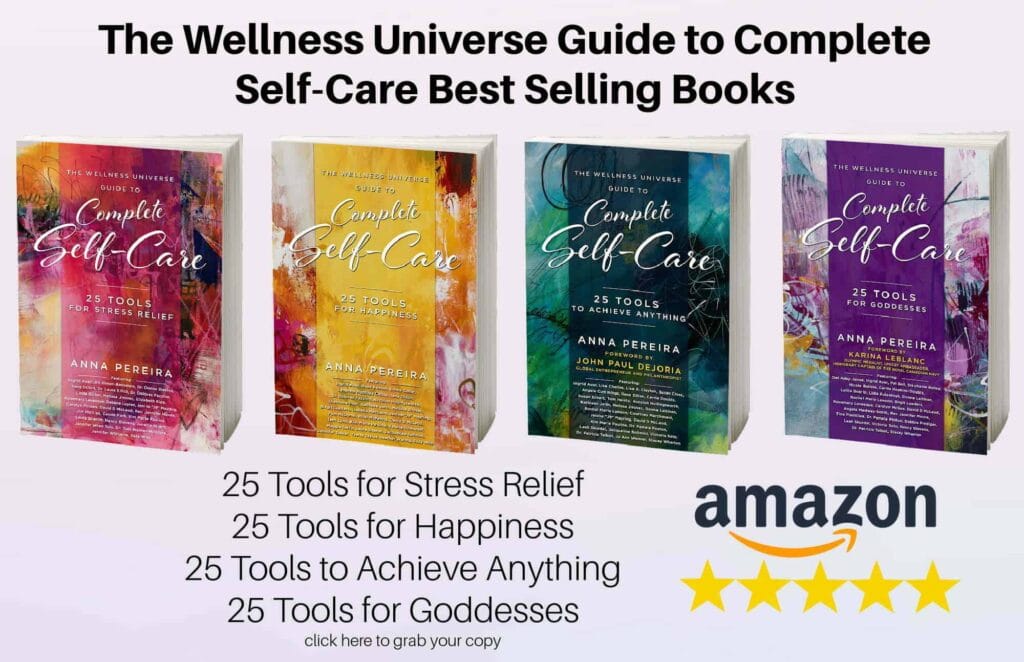
#1 Bestseller Available Now
The Wellness Universe Guide to Complete Self-Care:
25 Tools for Navigating Loss, Grief and Transition
The Wellness Universe Guide to Complete Self-Care, a #1 Bestselling book series, brings more well-being support to you. 25 Tools for Navigating Loss, Grief & Transition is available now.
 Grab Your Copy Today for $1.99!
 Grab Your Copy Today for $1.99!
Healing. Here. Now. Mindfulness, Trauma, and Recovery is a course for self-care and healing brought to you in partnership with Elizabeth Kipp, Founder of Elizabeth Kipp Stress Management, LLC and Wellness Universe Trauma Expert Leader exclusively for Wellness for All programming.
Catch the replay – https://bit.ly/HealingHereNow
A Transformational Journey Workshops
Unlock the full transformational journey with all 29 powerful workshops!

Blessing for Your Transformation
with Elizabeth Kipp
Step into a powerful journey of healing and renewal with a live reading of Blessing for Your Evolutionary Transformation from the #1 best-selling book series The Wellness Universe Guide to Complete Self-Care: 25 Tools for Transformation. Release what no longer serves you, reconnect with your inner strength, and rediscover your purpose with clarity and peace. Join live for an inspiring experience of growth, conversation, and transformation—you don’t want to miss it!

Elizabeth is a Health Facilitator, Empowerment Coach, EFT/Tapping and Ancestral Clearing Practitioner, and Kundalini Yoga Teacher, helping people to step into the power of their own healing. She has turned her attention as a patient advocate and health facilitator in service to the alarmingly high population of people who suffer from stress, chronic pain, and the quest for a life free from suffering.